



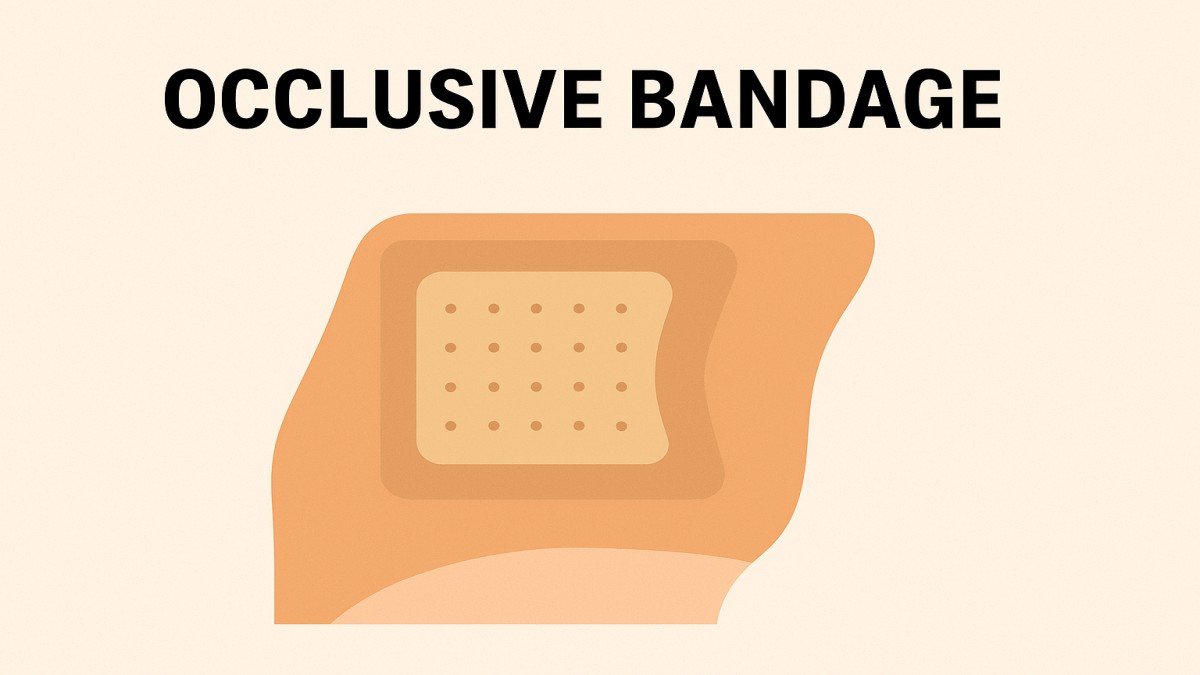
Occlusive Bandage. When it comes to emergency medical care and wound management, occlusive bandages play a critical role. They are not your everyday bandages — they are specifically designed to seal wounds completely from air and water exposure, creating an airtight and watertight barrier. Whether used on the battlefield, in hospitals, or during first-aid emergencies, occlusive dressings can save lives by preventing infection and promoting healing.
What Is an Occlusive Bandage?
An occlusive bandage (or occlusive dressing) is a type of medical dressing that completely seals a wound from air and moisture. The term “occlusive” means “to close off.” This kind of bandage is often used to protect open chest wounds, severe burns, or surgical incisions that need a sterile and airtight environment.
Unlike regular gauze or adhesive bandages, occlusive dressings use materials such as plastic film, petroleum gauze, or hydrocolloid layers that adhere tightly to the skin to form a seal.
Purpose of an Occlusive Bandage
The primary purposes of an occlusive bandage are:
- Prevent Air Entry: Especially vital for chest wounds, to stop air from entering the pleural cavity (which can cause lung collapse).
- Block Contaminants: It seals out bacteria, dirt, and other potential contaminants that could lead to infection.
- Maintain Moisture Balance: Helps retain moisture in the wound bed, which can speed up healing and reduce scarring.
- Reduce Pain: By keeping nerve endings covered and moist, pain from air exposure is minimized.
Common Situations Requiring an Occlusive Bandage
- Chest Wounds (Sucking Chest Wounds):
In emergency medicine, occlusive dressings are lifesaving when applied to penetrating chest injuries. These wounds can allow air to enter the chest cavity, collapsing the lung — a condition called pneumothorax. - Burn Injuries:
Occlusive bandages are also used to protect burns from external contamination and to retain moisture. - Post-Surgical Sites:
After certain surgical procedures, surgeons may use occlusive bandages to prevent infection and maintain a sterile healing environment. - Intravenous Catheter Sites:
Transparent occlusive dressings can secure IV lines while allowing medical staff to monitor the site.
Types of Occlusive Bandages
There are several types of occlusive dressings available depending on their purpose and composition.
1. Petrolatum Gauze
This dressing is made from fine mesh gauze infused with petroleum jelly. It’s non-adherent and provides a moist environment suitable for partial-thickness wounds and burns.
2. Plastic Film (Chest Seals)
Used in trauma care, these are transparent, adhesive plastic sheets designed to seal chest wounds. Some have a one-way valve to allow trapped air to escape while preventing more from entering.
3. Hydrocolloid Dressings
These dressings contain a gel-forming agent and provide a moist healing environment. They are ideal for chronic wounds, ulcers, and pressure sores.
4. Transparent Film Dressings
Thin, see-through, and adhesive, these are commonly used for IV sites and small wounds, allowing observation without removal.
How to Apply an Occlusive Bandage Properly
Applying an occlusive dressing correctly is crucial to ensure it functions as intended.
Step-by-Step Guide:
- Assess the Wound:
Determine the size, depth, and location of the wound before choosing the bandage type. - Clean the Area:
Gently cleanse the wound with sterile saline or antiseptic solution to prevent infection. - Dry Surrounding Skin:
Ensure the skin around the wound is dry so the adhesive can stick effectively. - Apply the Dressing:
Place the occlusive material over the wound, pressing the edges firmly to form an airtight seal. - Secure It:
If needed, use medical tape to reinforce the edges. - Monitor for Complications:
Watch for signs of infection, increased pain, or leakage around the bandage.
Benefits of Occlusive Bandages
- Promotes Faster Healing: Moist environments encourage cell regeneration.
- Prevents Infection: Creates a physical barrier against microbes.
- Reduces Scarring: Moist wound healing reduces tissue dehydration and scab formation.
- Comfortable and Flexible: Designed to move with the body, reducing discomfort.
- Visibility (in transparent types): Medical staff can easily inspect wounds or IV sites.
Conclusion
An occlusive bandage is more than just a wound cover — it’s a vital medical tool that saves lives, prevents infections, and speeds up recovery. From battlefield trauma to post-surgery healing, its airtight protection ensures that wounds get the environment they need to heal effectively. Knowing when and how to use one can make a life-changing difference in emergencies or clinical care.
FAQs
1. What is the main purpose of an occlusive bandage?
To seal a wound from air and contaminants while maintaining a moist healing environment.
2. Can I use an occlusive dressing on any wound?
No. Avoid using it on infected or heavily draining wounds.
3. Are occlusive dressings reusable?
No, they are single-use to maintain sterility and prevent contamination.
4. How long should I leave an occlusive dressing on?
Typically, 24–48 hours, but always follow medical advice based on the wound type.
5. Is an occlusive dressing waterproof?
Yes, most are waterproof, making them suitable for showering or wet conditions.