

Introduction to the Hyoid Bone
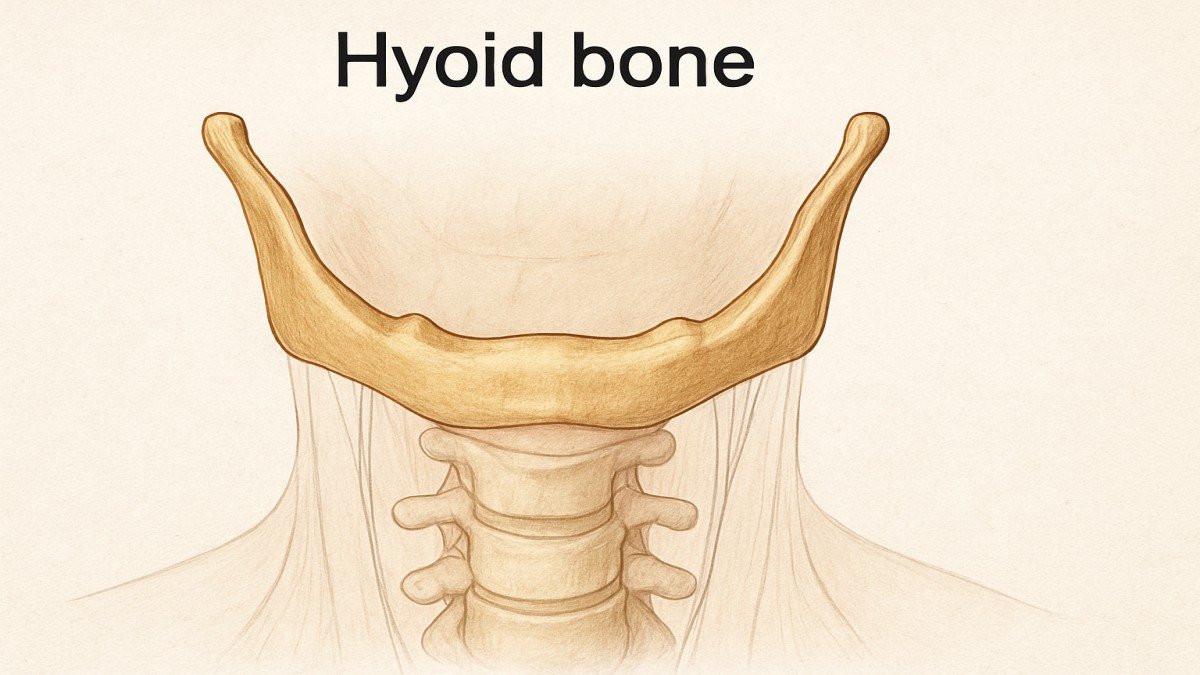
The hyoid bone is one of the most fascinating structures in the human body. Despite being tiny and often overlooked, it plays a huge role in everyday activities like speaking, breathing, and swallowing. Want to know the coolest part? It’s the only bone in your body that doesn’t touch any other bone.
Let’s break down what makes the hyoid bone so special.
What Makes the Hyoid Bone Unique?
The hyoid bone “floats” in your neck. While every other bone forms joints with other bones, the hyoid is anchored only by muscles and ligaments. Think of it like a little island suspended by ropes—it stays stable, but only because everything around it is doing its job.
Where Is the Hyoid Bone Located?
Located just above the larynx (voice box) and below the mandible (jaw), the hyoid sits right in the front of your neck. If you gently press the upper neck area and swallow, you can feel it move.
Anatomy of the Hyoid Bone
Body of the Hyoid
This is the central part—a small curved shape that forms the foundation of the bone.
Greater Cornua (Horns)
These longer “wings” extend to the sides and help attach major muscles.
Lesser Cornua (Horns)
Smaller projections that anchor ligaments. They give the bone even more stability.
Functions of the Hyoid Bone
Essential Role in Swallowing
Every time you swallow food or water, the hyoid bone moves upward to help close the airway and guide food safely into the esophagus. Without it, swallowing would be extremely difficult.
Importance for Speech and Sound Production
The hyoid provides support to the larynx, helping you form sounds, project your voice, and articulate words. It’s like the backstage crew of a theater—always working, rarely noticed.
Role in Breathing and Airway Support
The hyoid also keeps the upper airway open. It helps stabilize structures that let you breathe comfortably, especially during sleep.
Muscles Attached to the Hyoid Bone
Suprahyoid Muscles
These pull the hyoid upward during swallowing and speaking. They connect it to the jaw and skull.
Infrahyoid Muscles
These pull the hyoid downward and stabilize it during speech and breathing.
Why These Muscles Matter
These muscles allow the hyoid to move in multiple directions—forward, backward, up, and down—and each motion matters for safe swallowing and effective communication.
Disorders and Conditions Affecting the Hyoid Bone
Hyoid Bone Fracture
Though rare, fractures can occur:
- During strangulation
- In severe car accidents
- During certain sports injuries
Symptoms include throat pain, difficulty swallowing, and painful speech.
Hyoid Bone Syndrome
This involves chronic throat pain caused by irritation around the hyoid area. It can feel like something is stuck in the throat.
Muscular Tension & Pain Disorders
Poor posture, stress, or excessive voice use can strain the muscles connected to the hyoid.
How Doctors Diagnose Hyoid Problems
Imaging Tests
Doctors may use:
- X-rays
- CT scans
- Ultrasound
These help them rule out fractures or inflammation.
Physical Examination
Your doctor may gently press the hyoid area to check for pain or movement irregularities.
When to Seek Medical Help
If you experience constant throat pain, painful swallowing, or unexplained voice changes, it’s time to book an appointment.
Treatment Options
Pain Management
Mild inflammation or strain may respond to:
- Anti-inflammatory medications
- Warm compresses
- Resting the voice
Physical Therapy
A therapist may guide you through exercises that relax the neck and throat muscles.
Treatment for Fractures
A hyoid fracture usually requires:
- Pain control
- Soft diet
- Close monitoring
Surgery is only needed in severe cases.
Conclusion
The hyoid bone might be small, but it plays a giant role in your daily life. From swallowing and speaking to breathing comfortably, this little floating bone is constantly working behind the scenes. Understanding its functions and recognizing signs of problems can help you protect your health and keep your neck functioning smoothly.
FAQs
1. Can you feel your hyoid bone?
Yes! If you gently press the upper neck area under your chin, you can feel it move when you swallow.
2. Why is the hyoid bone so important?
It supports speech, swallowing, and airway function—three essential activities you do every day.
3. Is a hyoid bone fracture dangerous?
It can be serious and requires medical evaluation, especially because it’s usually linked to trauma.
4. Can poor posture affect the hyoid bone?
Absolutely. Poor posture strains the neck muscles, which can lead to tension around the hyoid.
5. Do animals have a hyoid bone?
Yes, most mammals do, but the human hyoid is uniquely shaped to support complex speech.