



Introduction
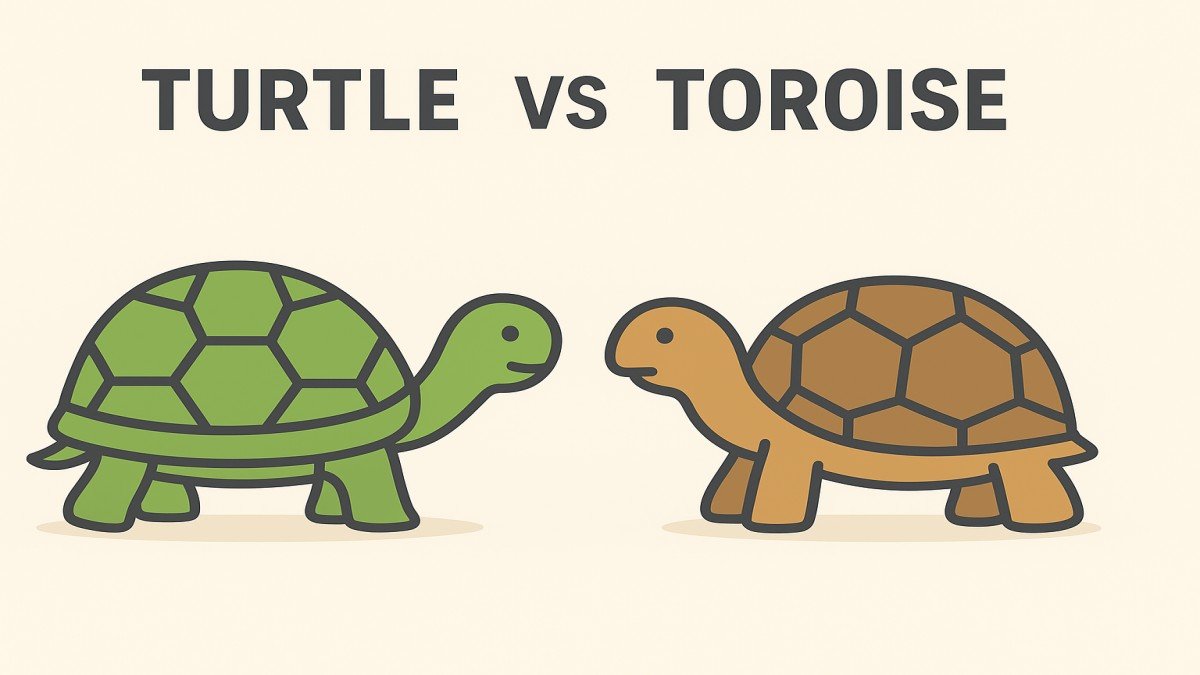
Turtle vs Tortoise. Ever wondered whether that slow-moving reptile you saw is a turtle or a tortoise? You’re not alone. These two animals look similar at a glance, but they’re actually quite different in lifestyle, anatomy, and behavior. Let’s break things down in a simple, friendly way so you can finally tell them apart like a pro.
What Exactly Is a Turtle?
General Characteristics
Turtles are reptiles that spend most of their lives in water. They have streamlined shells, webbed feet, and lightweight bodies that help them swim with ease.
Habitat and Lifestyle
You’ll find turtles in oceans, rivers, ponds, and lakes. Some are fully aquatic, while others come to land only to bask or lay eggs.
What Exactly Is a Tortoise?
General Characteristics
Tortoises are land-dwelling reptiles with dome-shaped shells and thick, sturdy legs made for walking—not swimming.
Habitat and Lifestyle
They live in deserts, grasslands, and forests. Tortoises rarely enter water except to drink or cool down.
Turtle vs Tortoise: Main Differences
Shell Shape
- Turtles: Flat, streamlined shells built for swimming
- Tortoises: Rounded, dome-shaped shells for protection on land
Feet and Limbs
- Turtles: Webbed feet or flippers
- Tortoises: Elephant-like, sturdy legs
Habitats
- Turtles: Mostly water
- Tortoises: Always on land
Diet Preferences
- Turtles: Omnivores—eat plants, insects, and small fish
- Tortoises: Herbivores—love grasses, vegetables, and fruits
Lifespan Differences
- Turtles: 20–80 years depending on species
- Tortoises: Can live over 150 years
Speed and Movement
Tortoises may look slow, but turtles aren’t much faster on land—they shine in water.
Anatomy Comparison
Bone Structure
Tortoises have heavier, thicker bones for land stability, while turtles have lighter bones that help them float.
Shell Composition
Both shells are made of bone, but tortoise shells are stronger and more rounded for protection.
Behavioral Differences
Social Behavior
Turtles are more active and may interact more within their environment, while tortoises tend to prefer solitude.
Reproduction Differences
Both lay eggs on land, but turtle eggs incubate faster due to warmer, sandy nesting sites.
Diet Comparison
What Turtles Eat
Most turtles enjoy:
- Small fish
- Aquatic plants
- Worms
- Insects
What Tortoises Eat
Herbivore favorites include:
- Leafy greens
- Fruits
- Flowers
- Vegetables
Lifespan and Growth
How Long Turtles Live
Turtles have decent lifespans, typically between 25–80 years depending on species.
How Long Tortoises Live
Tortoises are known for their longevity—many live past 100, and some reach 150+ years.
Popular Turtle Species
- Sea turtle
- Red-eared slider
- Painted turtle
- Snapping turtle
Popular Tortoise Species
- Sulcata tortoise
- Russian tortoise
- Galápagos tortoise
- Leopard tortoise
Common Misconceptions About Turtles and Tortoises
- “Tortoises can swim.” → False—most will drown.
- “Turtles always live in the sea.” → Many live in freshwater.
- “They eat the same food.” → Not true—tortoises are mostly herbivores.
Tips for Choosing a Pet
Which One Is Easier to Care For?
Turtles require special tanks with water filtration.
Tortoises need spacious land enclosures with UV lighting.
Tortoises are easier for beginners, while turtles require more equipment.
Habitat Requirements
- Turtle: Water tank, basking area, UV light
- Tortoise: Large land enclosure, heat lamp, dry environment
Conclusion
Turtles and tortoises may look alike, but their differences are huge—from their shells to their diets to where they live. Understanding these distinctions helps you appreciate their unique traits and choose the right one if you ever want a reptile companion. Now, when you see one in the wild or at a pet shop, you’ll instantly know which is which!
FAQs
1. Can tortoises swim?
No, tortoises cannot swim and can drown if placed in deep water.
2. Do turtles live on land?
Some do spend time on land, but they always return to water.
3. Which lives longer—a turtle or a tortoise?
Tortoises generally live much longer.
4. Are turtles faster than tortoises?
In water, yes. On land, not really.
5. Which makes a better pet?
For most people, tortoises are easier to care for than aquatic turtles.