


Introduction to Skincare Professions
Aesthetician vs Esthetician. Let’s be honest: skincare is no longer a luxury—it’s a lifestyle. As more people prioritize their skin health, the demand for skincare professionals is skyrocketing. But here’s the kicker—many people confuse aesthetician with esthetician. Sounds similar, right? But the truth is, they’re not the same.
Defining the Terms
What is an Esthetician?
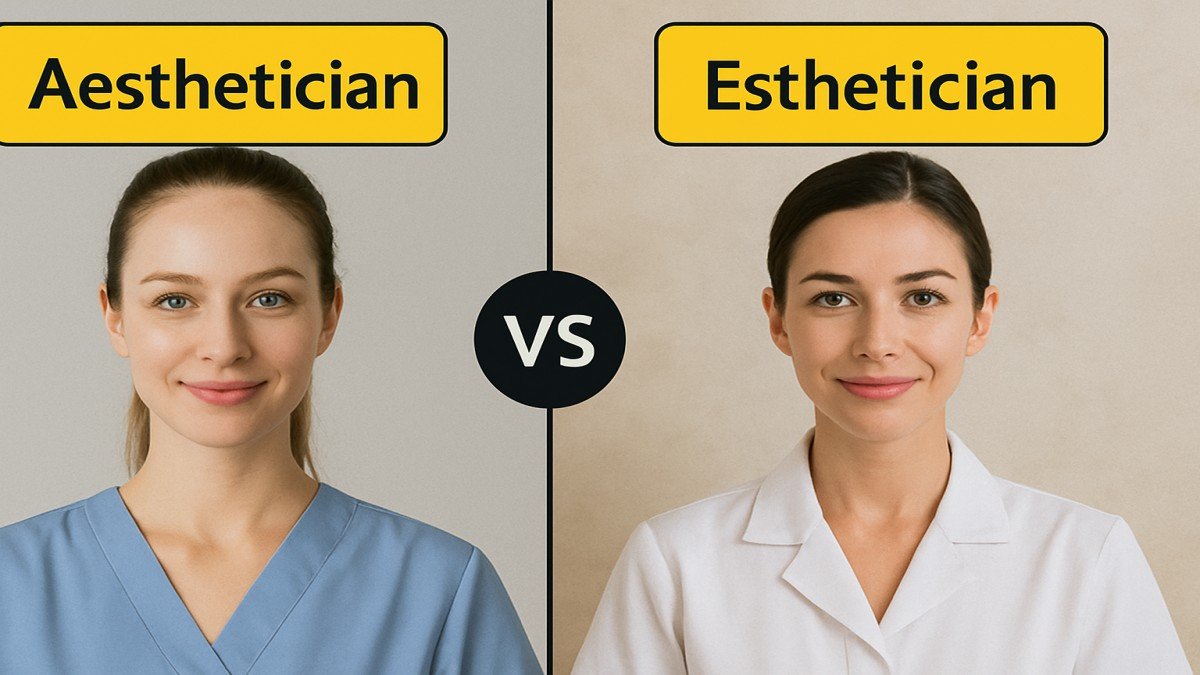
An esthetician (often spelled without the “a”) is primarily focused on cosmetic skincare treatments. Think facials, waxing, chemical peels, and other beautifying services. They work on the surface level of your skin to help you look and feel your best.
What is an Aesthetician?
An aesthetician, sometimes referred to as a medical aesthetician, takes things a step further—working in clinical or medical environments. They’re trained to perform more in-depth procedures like laser therapy, microdermabrasion, and pre/post-operative skincare.
Core Focus Areas
Estheticians and Cosmetic Treatments
Estheticians are all about enhancing your skin’s appearance. Their focus is primarily non-invasive procedures aimed at relaxation, cleansing, and rejuvenation.
Aestheticians and Medical-Grade Procedures
Aestheticians usually work in tandem with dermatologists or plastic surgeons. Their focus? Corrective skincare—addressing acne scarring, pigmentation, and even prepping patients for surgery.
Education & Licensing
Training Requirements for Estheticians
Most estheticians complete a state-approved cosmetology or esthetics program, which typically takes 300 to 600 hours. After that, they pass a licensing exam. Easy enough!
Medical Training for Aestheticians
Aestheticians require advanced training, sometimes even medical certifications. They may need to learn anatomy, physiology, and work under a licensed physician depending on their state’s laws.
Where They Work
Typical Workplaces for Estheticians
You’ll find estheticians in salons, spas, or wellness centers—the kinds of places that smell like lavender and play relaxing music.
Common Work Settings for Aestheticians
Aestheticians, on the other hand, work in clinics, dermatology offices, hospitals, and sometimes even plastic surgery centers.
Types of Services Provided
Esthetician Services
- Facials
- Waxing
- Eyebrow shaping
- Basic chemical peels
- Makeup application
Aesthetician Services
- Laser treatments
- Botox assistance
- Dermaplaning
- Microneedling
- Post-operative care
Tools and Techniques Used
Tools Used by Estheticians
They use tools like steamers, extraction tools, and LED masks—things you’d see during a classic spa day.
Advanced Equipment Handled by Aestheticians
Aestheticians work with lasers, microneedling pens, and more complex equipment that requires technical know-how and sometimes even medical oversight.
Career Pathways
Career Growth for Estheticians
Estheticians can move on to open their own spa, become educators, or specialize in certain treatments like holistic skincare.
Advancement Opportunities for Aestheticians
Aestheticians often evolve into clinical trainers, medical spa managers, or even work alongside top cosmetic surgeons.
Salary Expectations
What Estheticians Earn
The average salary for estheticians in the U.S. ranges from $30,000 to $50,000 annually, depending on experience and location.
Aesthetician Salary Potential
Medical aestheticians can earn significantly more—$50,000 to $80,000+, especially when working in high-end clinics or cities.
Skills Needed
Soft Skills and Personality Traits
Both roles require:
- Empathy
- Attention to detail
- Good communication
- A calming presence
Technical Skills and Certifications
While estheticians might need CPR and sanitation certifications, aestheticians require advanced technical training on medical-grade machines and procedures.
State-by-State Regulations
Variations in Licensing
Each U.S. state has its own licensing rules. Some require separate licenses for medical aestheticians, while others group both under a general esthetics license.
Legal Scope of Practice
Important: Not all states allow estheticians to perform medical treatments. It’s vital to check your state board before assuming what each role can legally do.
Clientele and Patient Relationships
Estheticians and Beauty Clients
Estheticians usually serve beauty-conscious individuals looking for relaxation, glow-ups, or regular skin maintenance.
Aestheticians and Medical Patients
Aestheticians work with patients under medical supervision—treating skin conditions, pre-op, or post-op skin recovery.
Conclusion
While estheticians and aestheticians share a love for skincare, their roles, training, and impact differ greatly. One focuses on beauty, the other on medical treatment. Knowing the difference helps you choose the right professional—and maybe even the right career path.
FAQs
1. Can an esthetician become an aesthetician?
Yes, but it requires additional medical training and certifications, depending on your state.
2. Is one better paid than the other?
Generally, aestheticians earn more due to the complexity and clinical nature of their work.
3. Do they require different licenses?
Often, yes. Some states require separate licenses or endorsements for medical aesthetics.
4. Can both work in a dermatologist’s office?
Typically, only aestheticians work in medical environments like dermatology clinics.
5. How do I know which one I need?
Ask yourself: Are you seeking beauty or treatment? That answer will guide your choice.