


Introduction
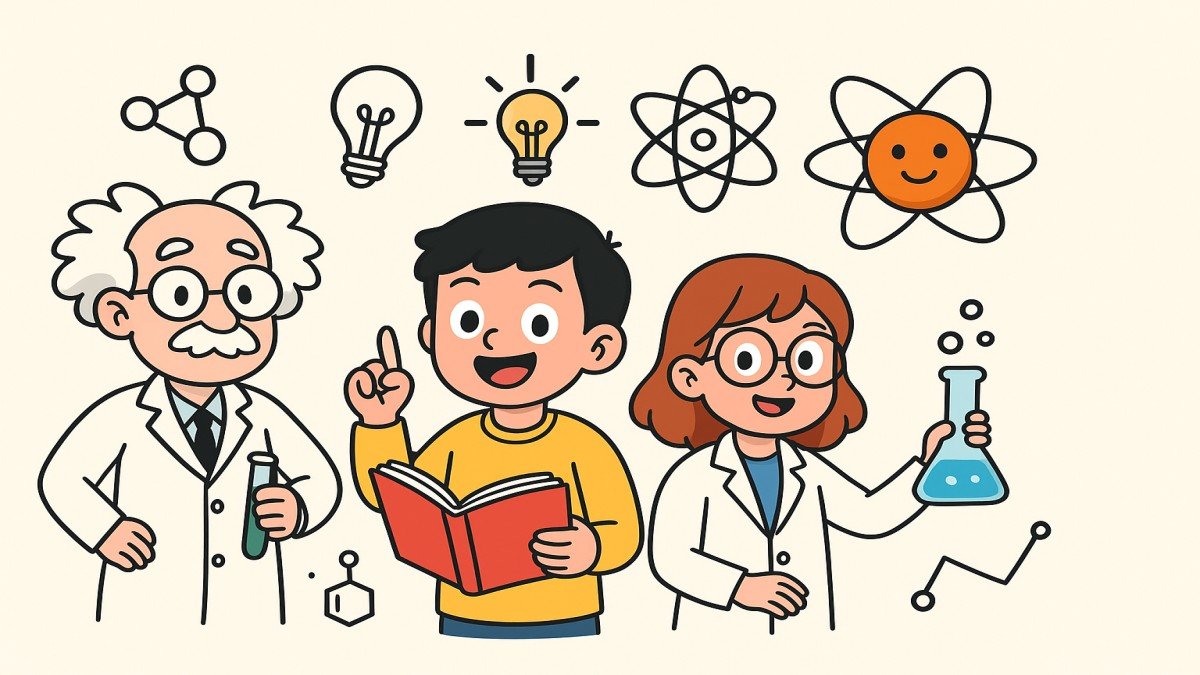
Cartoons on Science. Science can sometimes feel intimidating full of formulas, theories, and concepts that seem too complicated. But what if learning science could feel like watching your favorite animated show? That’s where science cartoons come in. These playful, colorful visuals simplify complex ideas and make learning fun, relatable, and memorable.
Let’s explore how cartoons help make science accessible to everyone.
The Evolution of Science Cartoons
Early Science Illustrations
Long before digital animation, scientists used drawings and diagrams to explain ideas. Whether it was Darwin sketching finches or physicists drawing atoms, visuals have always been central to science communication.
Rise of Animated Science Media
As animation grew, so did educational shows. Programs like The Magic School Bus turned scientific lessons into adventures.
Modern Digital Cartoons in Education
Today, digital tools allow creators to produce polished science cartoons accessible to millions worldwide.
Why Science Cartoons Are So Effective
Simplifying Complex Concepts
Cartoons break down overwhelming ideas into simple visuals. A cartoon of cells as “tiny factories” instantly makes biology easier to grasp.
Visual Metaphors
Comparing electricity to water flow or DNA to a twisted ladder helps learners understand quickly.
Humor as a Learning Tool
Funny characters can make even the most boring concepts exciting.
Boosting Memory Retention
Studies show that visuals help the brain remember information faster and longer.
Types of Science Cartoons
Educational Cartoons
These animations explain topics step-by-step, often used in classrooms.
Classroom Animations
Teachers use short videos to introduce or summarize lessons.
Online Explainers
Platforms like YouTube host thousands of science cartoon channels.
Comics and Web Comics
Science comics mix humor with learning, making them great for both kids and adults.
Science Humor Comics
These often use jokes to explain scientific misunderstandings.
Research-Based Comics
Some are created by real scientists to share research in a fun way.
Popular Science Cartoons Loved Worldwide
Bill Nye Animated Clips
These short animations break down chemistry, physics, and biology.
The Magic School Bus
A classic that brings scientific adventures to life.
Kurzgesagt – In a Nutshell
Known for its stunning animation style and deep scientific storytelling.
Science Memes and Micro-Cartoons
Short, shareable content that goes viral on social media.
Benefits of Using Science Cartoons in Education
Engaging Students
Cartoons grab attention faster than textbooks.
Making Experiments Understandable
Seeing animated steps helps students follow processes better.
Encouraging Curiosity and Creativity
Cartoons inspire kids to ask questions and explore.
How Teachers and Parents Can Use Cartoons for Science Learning
In the Classroom
Visual Aids
Using animations alongside lessons makes learning dynamic.
Quick Summaries
End a topic with a cartoon summary to reinforce learning.
At Home
Study Support
Parents can use science cartoons to explain homework topics.
Revision Techniques
Short cartoons make last-minute revision easier.
Cartoons for Complex Scientific Fields
Physics Cartoons
Explaining gravity or quantum mechanics visually makes concepts less intimidating.
Biology Cartoons
Perfect for showing processes like photosynthesis or digestion.
Chemistry Cartoons
Animations of atoms bonding help simplify reactions.
Astronomy Cartoons
Understanding stars, planets, and galaxies becomes much easier.
The Role of Cartoons in Scientific Research Communication
Graphical Abstracts
Researchers use illustrated summaries to explain studies at a glance.
Science Communication on Social Media
Cartoon posts often go viral, spreading science faster.
Creating Your Own Science Cartoons
Basic Tools and Apps
Tools like Canva, Procreate, and animation apps help beginners create simple science cartoons.
Tips for Beginners
- Use simple shapes
- Add humor
- Keep the science accurate
Using Humor Without Losing Accuracy
A joke is fine—just don’t distort the science.
The Future of Science Cartoons
AI-Generated Educational Animations
AI tools are making it easier to create science cartoons quickly.
Virtual Reality and Animated Science Learning
Imagine entering a cell or walking on Mars through animated VR—this future is closer than we think.
Conclusion
Science cartoons are more than just fun—they’re powerful learning tools that make knowledge accessible. Whether you’re a student, parent, teacher, or just curious about the world, science cartoons help you understand the universe one colorful frame at a time.
FAQs
1. Are science cartoons good for all ages?
Yes, they simplify complex ideas for kids while still offering depth for adults.
2. Can cartoons really help with learning science?
Absolutely—visual content boosts retention and understanding.
3. Are science cartoons accurate?
Most educational ones are, but always check the source.
4. Where can I watch science cartoons?
YouTube, educational apps, and classroom platforms.
5. Can I create my own science cartoon?
Yes! Many beginner-friendly tools make it easy to start.