




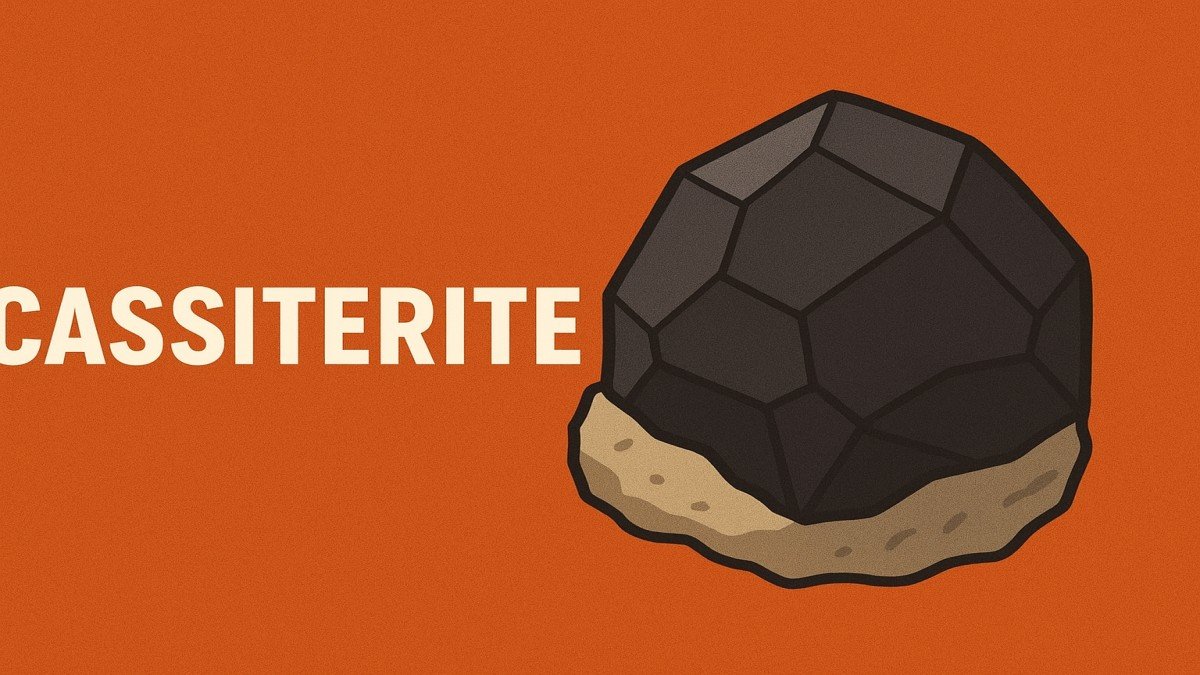
Introduction to Cassiterite
Cassiterite might not be a mineral you hear about every day, but if you’ve ever used electronics, cookware, or anything with a protective coating, you’ve benefited from it. As the chief ore of tin, cassiterite has shaped industries, trade routes, and human civilization for centuries.
Overview of the Mineral
Cassiterite is a tin oxide mineral (SnO₂) known for its high density, durability, and lustrous shine. Its name comes from the Greek word kassiteros, meaning tin. Throughout history, this mineral has played a crucial role in metal production.
Why Cassiterite Matters Today
In our modern world—filled with smartphones, electrical wiring, and soldered components—cassiterite remains as relevant as ever. Tin is indispensable in electronics manufacturing, making cassiterite essential to global technological development.
Geological Formation of Cassiterite
How Cassiterite Forms
Cassiterite typically forms in hydrothermal veins and pegmatites, where hot, mineral-rich fluids solidify within cracks in the Earth’s crust.
Hydrothermal Deposits
These are the most common sources. When molten rock cools, minerals crystallize from water-rich fluids, leaving behind tin-bearing veins.
Pegmatite and Alluvial Placers
Cassiterite is resistant to weathering, so pieces often break off and accumulate in rivers. These placer deposits can be easier to mine than hard rock locations.
Global Distribution
Major producers include:
- China (world’s largest tin producer)
- Indonesia
- Bolivia
- Democratic Republic of Congo
- Myanmar
Physical and Chemical Properties
Appearance and Color Variations
Cassiterite typically appears:
- Black
- Brownish-black
- Yellowish-brown
- Occasionally transparent in gem-quality specimens
Its adamantine to metallic luster makes it visually striking.
Hardness, Density, and Composition
- Hardness: 6–7 on the Mohs scale
- Density: Exceptionally high, around 6.8–7.1 g/cm³
- Composition: Primarily tin oxide (SnO₂)
Distinctive Characteristics
Cassiterite is known for:
- Strong luster
- High refractive index
- Resistance to chemical breakdown
Economic Importance of Cassiterite
Role in Tin Production
About 80% of the world’s tin comes from cassiterite. Smelting the mineral releases pure tin, which then becomes part of countless industrial applications.
Industries That Depend on Tin
Electronics and Soldering
Tin is a primary component of solder, the material that binds electronic components together. Without solder, modern circuit boards simply wouldn’t function.
Alloys and Coatings
Tin is used in:
- Bronze (tin + copper)
- Pewter
- Corrosion-resistant coatings (tin plating)
Mining of Cassiterite
Major Mining Locations
Countries rich in cassiterite deposits include:
- China
- Indonesia
- Peru
- Rwanda
- Congo
Traditional vs. Modern Mining Methods
Placer Mining
Miners use panning or gravity separation to extract dense cassiterite grains from riverbeds.
Hard Rock Mining
More advanced methods involve drilling, blasting, and crushing ore bodies deep underground.
Environmental and Ethical Concerns
Conflict Minerals Issue
In regions like the Democratic Republic of Congo, cassiterite has been linked to armed conflict and exploitation. As a result, tin is classified as a conflict mineral.
Sustainable Mining Efforts
International regulations now require transparency in sourcing tin, encouraging ethical and eco-friendly mining practices.
Cassiterite Identification and Testing
How Geologists Identify It
Experts use:
- Visual inspection
- Density measurements
- Streak tests (cassiterite leaves a light brown streak)
Tools and Techniques
Advanced methods include:
- X-ray diffraction
- Electron microscopy
- Spectral analysis
Use of Cassiterite in Gemstones
Gem-Quality Cassiterite
Though rare, transparent cassiterite crystals can be cut into stunning gemstones with brilliant sparkle.
Cutting, Polishing, and Market Value
Due to its brittleness, only skilled gem cutters handle it. High-quality stones can fetch impressive prices among collectors.
Interesting Facts About Cassiterite
Historical Uses
Tin from cassiterite helped create bronze, which defined entire civilizations during the Bronze Age.
Rare Occurrences and Crystals
Some of the finest cassiterite crystals come from Bolivia and China, prized for their clarity and sharp structure.
Conclusion
Cassiterite is far more than just another mineral—it’s a foundation of modern technology, ancient civilization, and economic development. Whether used in electronics, alloys, or gemstone collections, its importance remains undeniable. As the world continues to rely on tin, understanding cassiterite becomes increasingly vital.
FAQs
1. What is cassiterite used for?
Primarily for producing tin, which is essential in solder, alloys, and protective coatings.
2. How is cassiterite formed?
It forms in hydrothermal veins, pegmatites, and placer deposits through geological processes involving mineral-rich fluids.
3. Where is cassiterite found?
Major deposits are located in China, Indonesia, Bolivia, Myanmar, and the Democratic Republic of Congo.
4. Why is cassiterite considered a conflict mineral?
In certain regions, its mining has been associated with armed groups, unethical labor conditions, and environmental harm.
5. Can cassiterite be used as a gemstone?
Yes, transparent cassiterite can be faceted into gems, although such specimens are rare.