


Introduction to “Conocer”
Conocer Preterite. If you’re learning Spanish, chances are you’ve come across the verb conocer, which means “to know” or “to be familiar with.” But here’s the twist—its meaning changes when used in the preterite tense. Suddenly, conocer transforms into “to meet” for the first time. That subtle shift can make a huge difference in conversation.
Understanding Spanish Verb Conjugations
Spanish verbs fall into categories: regular, which follow predictable patterns, and irregular, which like to break the rules. Conocer is one of those slightly irregular verbs that requires extra attention.
Conocer in the Present Tense
Before jumping into the preterite, let’s quickly revisit the present tense.
- Yo conozco – I know
- Tú conoces – You know
- Él/Ella conoce – He/She knows
- Nosotros conocemos – We know
- Vosotros conocéis – You all know
- Ellos/Ellas conocen – They know
Notice the irregular “yo conozco.” That’s a hint that conocer likes to bend the rules
What is the Preterite Tense?
The preterite tense is all about completed actions in the past. If you did it once and it’s over, the preterite is your go-to tense.
Example: Ayer conocí a tu hermano. (Yesterday I met your brother.)
Conocer in the Preterite Tense
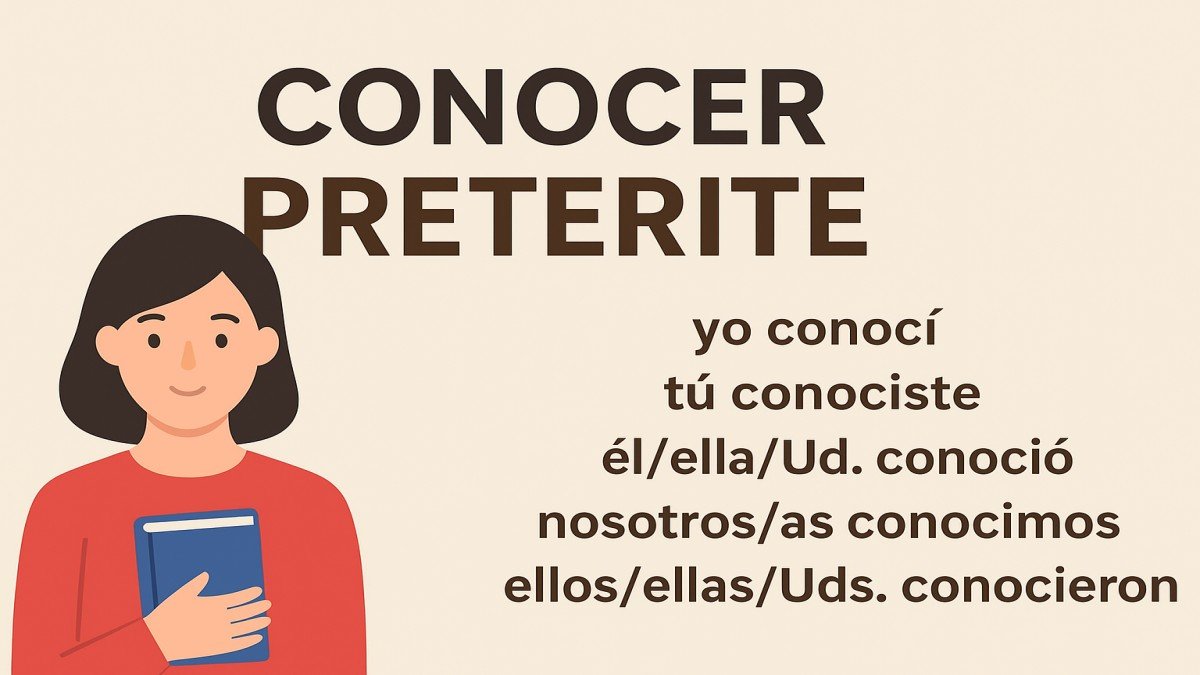
Here’s how conocer is conjugated in the preterite:
- Yo conocí – I met
- Tú conociste – You met
- Él/Ella conoció – He/She met
- Nosotros conocimos – We met
- Vosotros conocisteis – You all met
- Ellos/Ellas conocieron – They met
Special Meaning of Conocer in the Preterite
Here’s the key: In the preterite, conocer no longer means “to know.” It means “to meet (for the first time).”
Example: Conocimos a nuestros vecinos en la fiesta. (We met our neighbors at the party.)
Examples of Conocer in Sentences
- Yo conocí a tu profesor en la conferencia. (I met your professor at the conference.)
- Ellos conocieron la ciudad el año pasado. (They became familiar with the city last year.)
Conocer vs. Saber in the Preterite
This is where learners get stuck.
- Conocer (preterite): to meet (for the first time)
- Saber (preterite): to find out or discover
Example:
- Conocí a Juan ayer. (I met Juan yesterday.)
- Supe la verdad ayer. (I found out the truth yesterday.)
Common Mistakes Learners Make
- Using conocer instead of saber and vice versa.
- Forgetting that in preterite, it’s not “know” anymore—it’s “met.”
Mnemonic Devices to Remember Conocer Preterite
Think: “When you CONOCER someone in the past, you MET them.” Simple trick—conocer = connect (first meeting).
Practical Exercises
- Translate: “We met our new teacher last Monday.”
→ Conocimos a nuestro nuevo profesor el lunes pasado. - Fill-in-the-blank:
- Yo ____ (conocer) a tus padres ayer.
→ Yo conocí a tus padres ayer.
- Yo ____ (conocer) a tus padres ayer.
Conocer in Storytelling
El año pasado, conocimos a una familia en España. Fue increíble porque nunca habíamos estado allí antes. Conocí a personas muy amables y ahora seguimos en contacto.
Cultural Usage
In Spain, Mexico, and Latin America, the use of conocer in preterite is the same, but the situations can vary. For example, Spaniards might use it often when talking about traveling, while in Latin America, it’s commonly tied to social introductions.
Tips for Mastering Conocer Preterite
- Listen to Spanish podcasts and songs.
- Practice with flashcards.
- Speak it in real conversations. The more you use it, the faster it sticks.
Conclusion
The verb conocer in the preterite is small but mighty. It shifts from “knowing” to “meeting,” giving your Spanish a more natural and fluent touch. Mastering it will not only sharpen your grammar but also make your conversations feel more authentic.
FAQs
1. What does conocer mean in the preterite tense?
It means “to meet (for the first time).”
2. How is conocer different from saber in the preterite?
Conocer = to meet someone, saber = to find out or discover information.
3. Is conocer irregular in the preterite?
No, it follows regular -er/-ir preterite endings.
4. Can conocer still mean “to know” in the past?
Yes, but that would be in the imperfect tense, not the preterite.
5. How can I practice using conocer in preterite?
Through exercises, flashcards, and using it in real-life conversations.