

Introduction
The curette might be small in size, but its role in medical and dental procedures is anything but minor. This simple, spoon-shaped instrument is designed for scraping or debriding biological tissue and is commonly used in gynecology, dentistry, dermatology, and surgery. Whether it’s for removing plaque from teeth or tissue from the uterus, the curette plays a vital role in patient care across multiple specialties.
This article explores the types, uses, techniques, and significance of the curette, along with its role in modern healthcare practices.
What is a Curette?
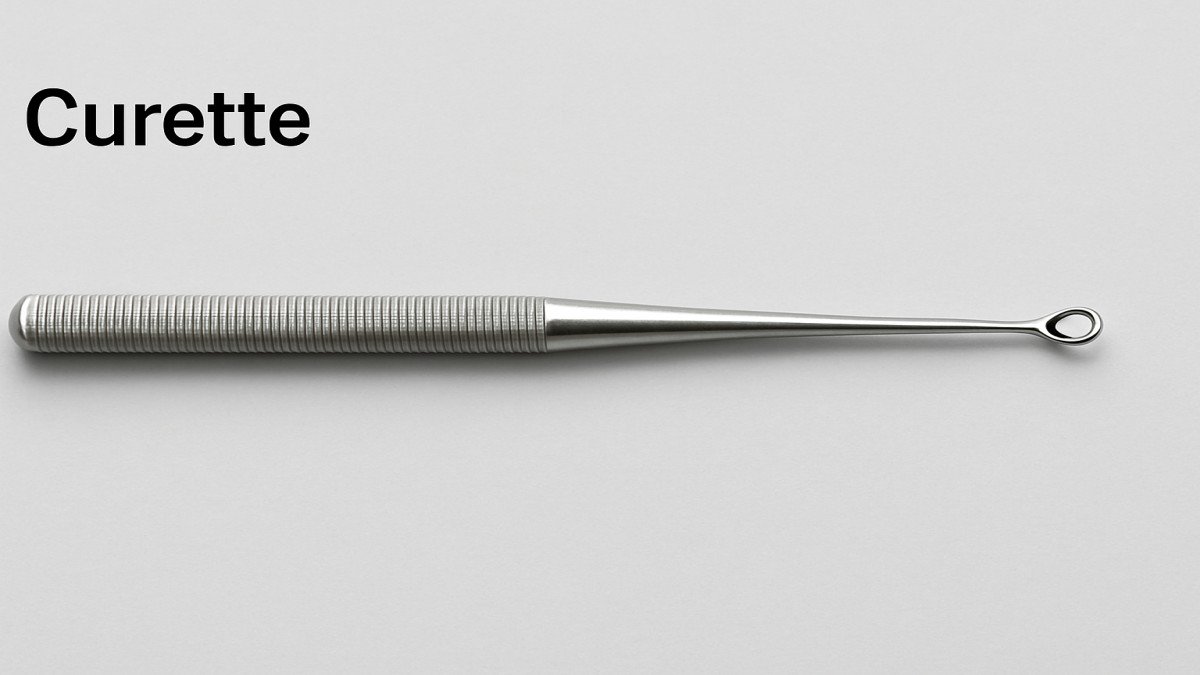
A curette is a surgical instrument with a small, scoop-shaped end, typically made of stainless steel. It’s used to scrape off tissue or debris from a surface or cavity, depending on the medical context.
The term comes from the French word “curer” meaning “to cleanse,” which perfectly captures its purpose.
Types of Curettes
Curettes are designed for specific applications and come in several varieties:
1. Surgical Curette
Used in procedures involving soft tissue debridement, such as in dermatology or wound care. These are sharp and can be single-use or reusable.
2. Uterine Curette
Used in gynecological procedures like dilation and curettage (D&C). This type is often longer, with a more slender shaft to access the uterus.
3. Periodontal Curette
Designed for dental scaling, especially below the gumline. They help remove plaque, tartar, and diseased tissue.
4. Ear Curette
Used to gently remove earwax or foreign materials from the ear canal.
5. Bone Curette
Utilized by orthopedic surgeons to scrape bone during procedures like bone grafting.
Design Features
Curettes vary in size and curvature, but most share some common features:
- Spoon or looped tip for controlled scraping
- Ergonomic handle for grip and precision
- Blunt or sharp edges depending on purpose
- Made from surgical-grade stainless steel
Some modern curettes also have disposable plastic versions, especially in ENT and dermatology.
Common Medical Uses of Curettes
1. Gynecology (Dilation and Curettage)
One of the most well-known uses. In a D&C procedure, a curette is inserted into the uterus after dilation to:
- Remove uterine lining after a miscarriage
- Diagnose or treat abnormal bleeding
- Clear the uterus of retained products of conception
2. Dentistry
Periodontal curettes are essential in scaling and root planing procedures. They’re designed to:
- Remove subgingival calculus
- Smooth root surfaces
- Eliminate infected tissue pockets
3. Dermatology
Curettes are used to remove:
- Warts
- Seborrheic keratosis
- Skin tags
- Certain skin cancers (like basal cell carcinoma)
In dermatology, curettage is often followed by electrosurgery for better results.
4. ENT (Ear, Nose, Throat)
Ear curettes help in:
- Gently removing cerumen (ear wax)
- Extracting foreign bodies in children
- Cleaning ear canal infections
5. Orthopedic and General Surgery
Bone curettes are used in:
- Tumor removal
- Bone graft collection
- Joint debridement
Technique of Curettage
Curettage must be performed with precision to avoid injury to healthy tissue. The basic steps include:
- Anesthesia (local or general depending on the procedure)
- Accessing the site (vaginal, oral, dermal, etc.)
- Using the curette to gently scrape target tissue
- Collecting tissue for analysis or disposal
- Post-procedure care, such as dressing or irrigation
The technique differs significantly between medical fields but always emphasizes control, sterility, and safety.
Benefits of Using a Curette
- Minimally invasive
- Cost-effective
- Provides diagnostic samples
- Useful in both minor and major procedures
- Can be disposable or reusable depending on need
Conclusion
The curette may be a small and often overlooked surgical tool, but its role in patient diagnosis, treatment, and care is substantial. From removing infected gums to collecting uterine samples, this simple scoop has made its mark in almost every medical field.
With advancing technology and improved designs, the curette continues to evolve—becoming safer, more efficient, and even more versatile. Whether used in a hospital, dental clinic, or dermatologist’s office, it remains an indispensable part of modern medicine.
FAQs
Q1: Is a curette painful to use?
Most curettage procedures are done under local or general anesthesia, so patients typically don’t feel pain during the process.
Q2: Can curettes be reused?
Yes, many are reusable after proper sterilization, but single-use versions are also widely available for safer, low-cost applications.
Q3: What’s the difference between sharp and blunt curettes?
Sharp curettes are used for scraping tissue, while blunt ones are for cleaning or removing soft materials like wax or mucus.
Q4: Are curettes used in biopsy?
Yes, in many cases, especially gynecological and dermatological biopsies, curettes help collect tissue samples for lab analysis.
Q5: Where can I see a curette in action?
Curettes are used in dentist offices, gynecology clinics, dermatology centers, and ENT practices. You may even spot one during routine earwax removal or dental cleaning.