



Introduction
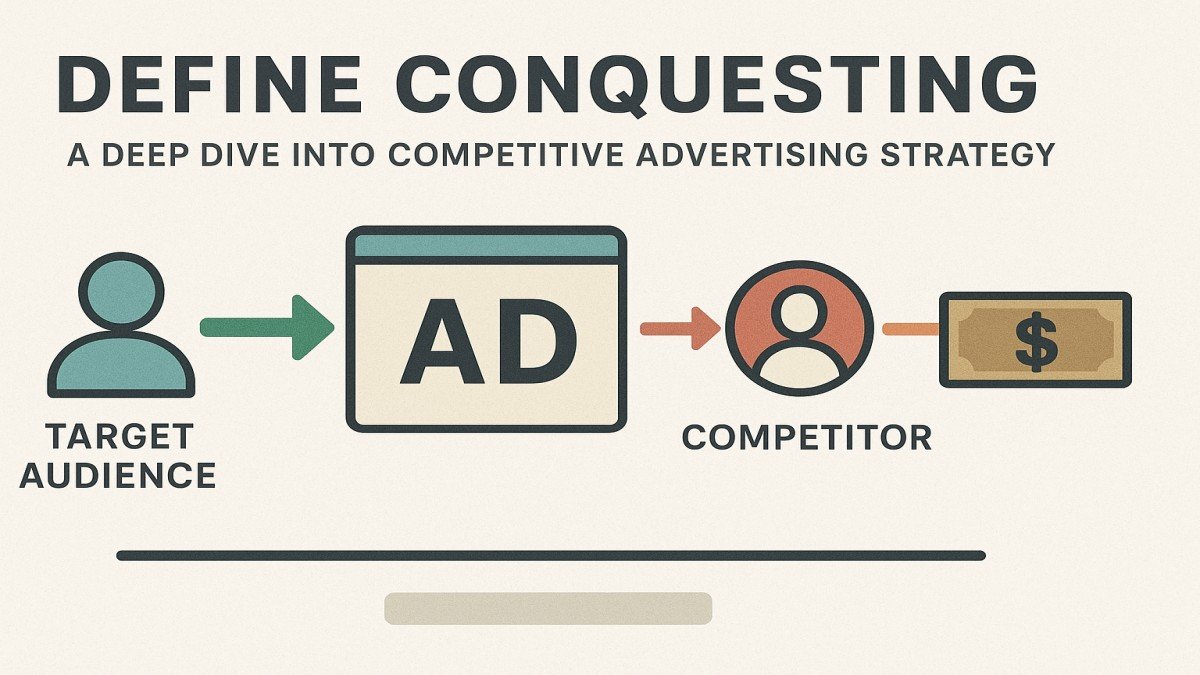
Define Conquesting. In the digital age, businesses are constantly battling for attention, loyalty, and market share. One particularly bold advertising strategy that has gained popularity is conquesting. This marketing tactic is all about directly targeting your competitors’ customers by placing your ads next to or against your rivals’ brand names, products, or keywords.
While it can be highly effective in swaying potential buyers, conquesting also sparks debates about ethics, legality, and long-term customer trust. So, what exactly is conquesting, and how can businesses use it effectively? Let’s break it down.
What is Conquesting?
Conquesting, in marketing terms, is the practice of targeting advertisements at a competitor’s audience. Typically, this involves buying digital ad space or search keywords that relate directly to a competitor’s brand or product.
For example, if you type in “Nike running shoes” on Google, and an ad for Adidas appears at the top of the search results, that’s conquesting in action. The goal is to “conquer” potential buyers before they finalize a purchase with the competitor.
Why Do Businesses Use Conquesting?
The logic behind conquesting is simple: customers searching for your competitor are already in the buying mindset. Instead of waiting for them to discover your brand organically, conquesting allows you to place your brand right in front of them at the perfect time.
Some key reasons include:
- Disrupting competitors’ sales funnel by diverting their leads.
- Boosting brand visibility among a highly relevant audience.
- Encouraging comparisons, especially if your product has a competitive edge.
- Challenging market leaders by gaining exposure in their territory.
How Conquesting Works in Digital Marketing
Conquesting shows up in several marketing channels:
1. Search Engine Marketing (SEM)
Brands bid on their competitors’ keywords so their ads show up in search results.
Example: Searching “Coca-Cola” but seeing a Pepsi ad at the top of Google.
2. Display Ads
Marketers place banner ads on websites or apps frequently visited by their competitors’ audience.
3. Social Media Ads
Platforms like Facebook, Instagram, and LinkedIn allow hyper-targeted ads, meaning you can target followers of competing brands.
4. Retail & E-commerce Platforms
On marketplaces like Amazon, companies often run ads directly on competitor product pages.
Examples of Conquesting in Action
- Burger Wars: McDonald’s and Burger King have long used conquesting tactics. Burger King famously ran ads targeting people near McDonald’s stores with cheaper deals.
- Automobile Industry: Car brands often target competitor model names in search ads. Searching “Toyota Camry” might bring up ads for Hyundai or Honda.
- Tech Rivalries: Samsung and Apple frequently use conquesting against one another during smartphone launches.
The Pros of Conquesting
Conquesting can be an incredibly powerful strategy when executed correctly:
- High Intent Audience – Customers searching for a competitor are already considering a purchase.
- Increased Brand Awareness – Your brand gets seen in direct comparison with competitors.
- Competitive Advantage – If your product offers better pricing or features, conquesting highlights it directly.
- Efficient Use of Budget – Instead of broad advertising, conquesting targets highly relevant potential buyers.
The Cons of Conquesting
Of course, conquesting comes with risks:
- Legal & Ethical Concerns – Some companies consider conquesting “unfair play.” In certain cases, trademark issues can arise if brand names are misused.
- Customer Perception – Aggressive tactics might turn off potential buyers who see your brand as overly competitive.
- Escalation of Ad Wars – If competitors retaliate, costs for ads can skyrocket.
- Not Always Effective – Loyal customers may ignore conquesting ads entirely, meaning wasted spend.
Conclusion
Conquesting is a bold and strategic form of marketing that can give brands a competitive edge by targeting rival customers directly. When done right, it enhances visibility, drives conversions, and challenges market leaders. However, companies must balance ambition with ethics to ensure they attract customers without alienating them.
In the ever-competitive world of marketing, conquesting is both a sword and a shield—it can win battles, but it must be wielded carefully.
FAQs
1. What is the meaning of conquesting in marketing?
Conquesting is a strategy where brands target ads at a competitor’s audience, often by bidding on their keywords or placing ads near their brand.
2. Is conquesting ethical?
It depends on execution. If done fairly, it’s seen as competitive marketing. If it misuses trademarks or misleads customers, it may be viewed as unethical.
3. Can conquesting work for small businesses?
Yes. Smaller brands can use conquesting to challenge bigger competitors, though budget efficiency is crucial.
4. What industries use conquesting most?
Common in fast food, tech, retail, and automotive industries, where rivalries are strong.
5. How do I run a conquesting campaign?
Start by identifying competitor keywords, craft unique ad copy highlighting your advantages, and measure ROI closely.