



Introduction to Jamón Serrano
Jamón Serrano isn’t just food—it’s a cultural icon in Spain. With its rich flavor, centuries-old tradition, and artisanal process, this dry-cured ham has become a staple in homes, restaurants, and tapas bars around the world.
What is Jamón Serrano?
Jamón Serrano literally translates to “mountain ham.” It’s a type of dry-cured ham made from white pigs and aged through a natural process that gives it its distinctive flavor.
Origins and Cultural Importance
Dating back to ancient times, curing ham was originally a preservation method. Today, Jamón Serrano is celebrated as a gourmet delight, symbolizing Spanish heritage and culinary pride.
Types and Grades of Jamón Serrano
Not all Jamón Serrano is the same. The grading depends on how long the ham is cured:
Gran Reserva
Cured for 15+ months—rich, deep flavor, and considered the finest.
Reserva
Cured for 12 to 14 months—balanced in flavor and texture.
Curado
Cured for 7 to 11 months—milder and more affordable.
How It Differs from Jamón Ibérico
While Jamón Serrano comes from white pigs, Jamón Ibérico is from Iberian pigs. The latter is fattier, nuttier, and more expensive. Serrano is more accessible but still delicious in its own right.
The Traditional Curing Process
Selection of Pork
Only the hind legs of healthy, well-fed white pigs are chosen.
Salting Phase
The hams are covered in sea salt for about 2 weeks to draw out moisture.
Drying and Aging
They are hung in dry, cool mountain air—often for over a year—to naturally cure and develop flavor.
Time and Temperature Conditions
Proper air circulation, consistent humidity, and cool temperatures are essential. That’s why most curing happens in mountain areas with ideal natural conditions.
Regions Known for Jamón Serrano Production
Andalusia
Known for its rich curing traditions and high-quality hams.
Aragon
A key contributor to Spain’s cured meat exports.
Castilla y León
Offers a cooler, higher-altitude climate perfect for aging.
Nutritional Profile of Jamón Serrano
It’s not just tasty—it’s nutritious too!
Protein Content
High in lean protein—great for muscle repair and growth.
Fat Composition
Contains healthy fats, though moderation is key.
Vitamins and Minerals
Includes B vitamins, iron, and zinc—important for energy and immunity.
Culinary Uses of Jamón Serrano
Served on Its Own
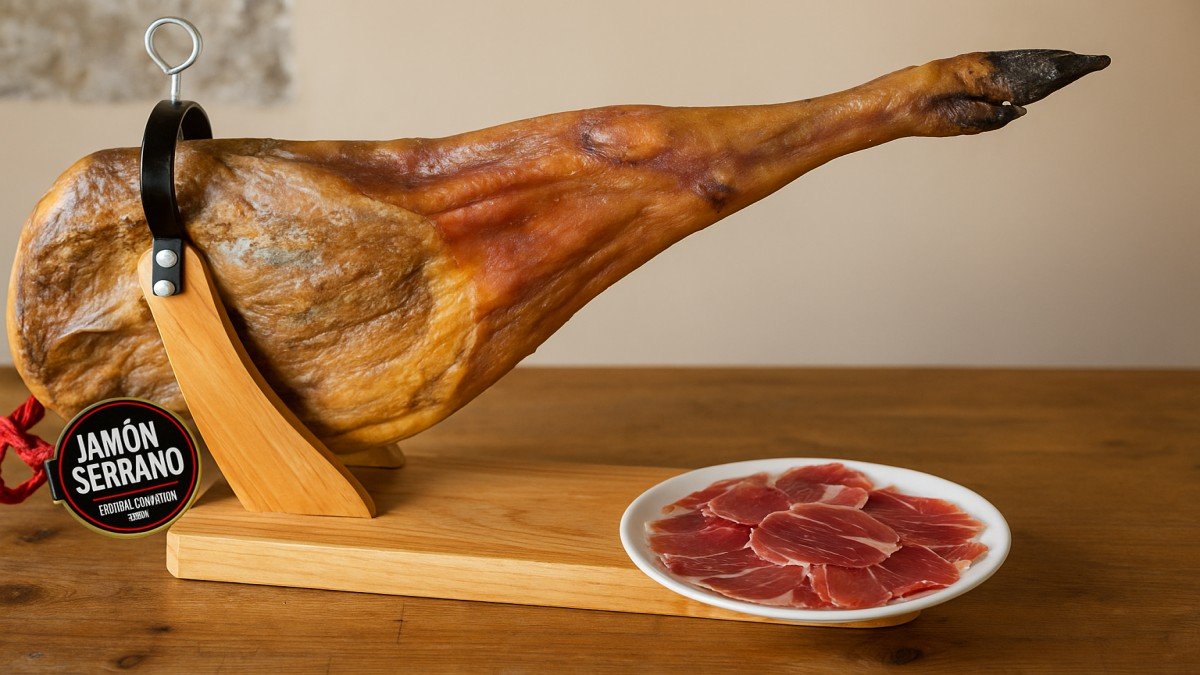
Thin slices on a platter are a classic, often paired with manchego cheese or melon.
As Part of Tapas
Used in small bites alongside olives, bread, and wine.
In Main Dishes and Salads
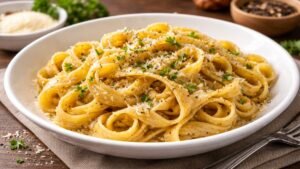
It elevates pasta, risotto, and fresh greens with its salty, savory punch.
How to Store and Slice Jamón Serrano
Storage Tips
Keep it in a cool, dry place. Once opened, cover with wax paper and a clean cloth.
Tools for Proper Slicing
A jamonero (ham stand) and long, flexible knife make all the difference.
How to Serve It for Maximum Flavor
Let it reach room temperature to release its full aroma and taste.
Buying Tips and What to Look For
Labels and Certifications
Look for the ETG (Traditional Specialty Guaranteed) seal.
Signs of Quality
Deep red color, visible marbling, and a subtle aroma.
Where to Buy
Specialty stores, gourmet markets, or trusted online retailers.
Price Range and Value
What Influences Price
Curing time, pig breed, and origin all affect cost.
Is It Worth the Investment?
Absolutely—especially Gran Reserva, which offers gourmet quality at a reasonable price compared to Jamón Ibérico.
Jamón Serrano vs. Prosciutto
Taste Differences
Jamón is firmer and slightly saltier, while Prosciutto is softer and sweeter.
Curing Techniques
Prosciutto is often wet-cured; Jamón is dry-cured in mountain air.
Which One to Choose?
It’s all about preference—Serrano for boldness, Prosciutto for delicacy.
Conclusion
Jamón Serrano is more than a Spanish delicacy—it’s a flavorful journey through history, tradition, and artisanal craft. Whether you’re savoring a slice with a glass of wine or adding it to your culinary creations, it never fails to impress. It’s a must-try for any food lover who appreciates the fine art of charcuterie.
FAQs
1. Can I bring Jamón Serrano into my country?
Check your local customs regulations—some countries restrict cured meat imports.
2. What’s the best way to slice Jamón Serrano at home?
Use a long, flexible knife and slice thinly at room temperature for best results.
3. Is Jamón Serrano safe to eat during pregnancy?
Due to potential listeria risk, consult your doctor first—it’s often advised to avoid.
4. How long does Jamón Serrano last once opened?
Properly stored, it can last up to 3 months—just cover and refrigerate sliced pieces.
5. Can I cook Jamón Serrano?
Absolutely! It adds a savory kick to eggs, pasta, and even soups.