

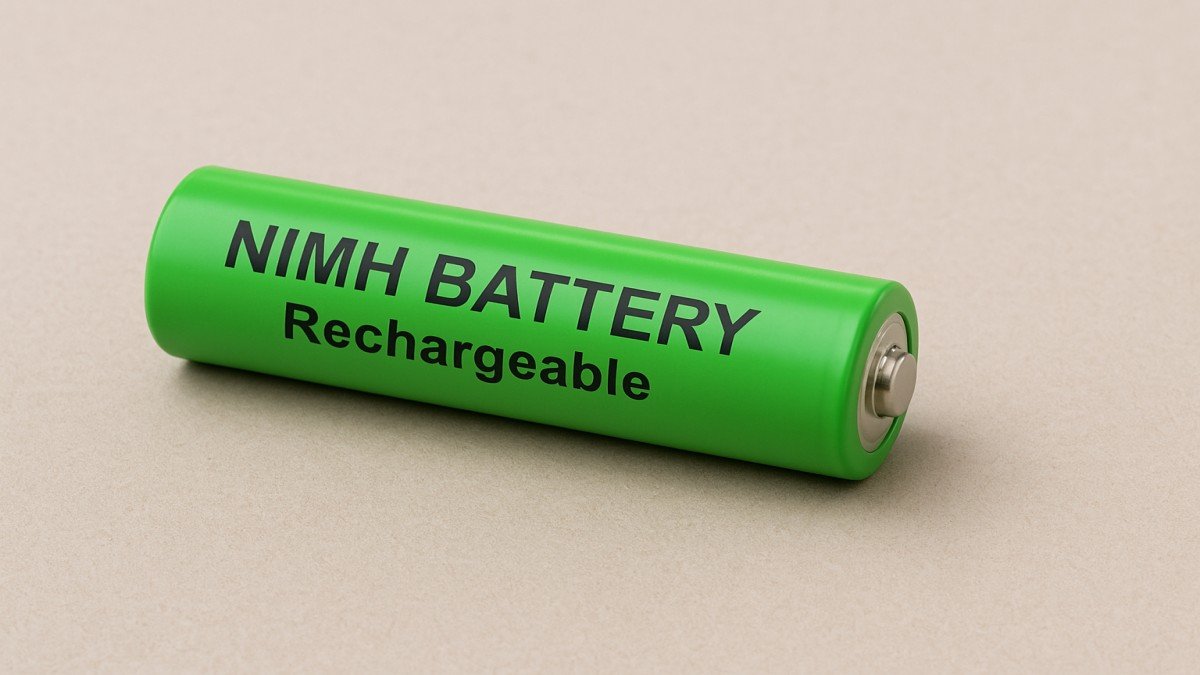
Introduction to NiMH Batteries
Let’s talk about those powerful little cylinders that keep your gadgets alive—NiMH batteries. You’ve probably used them in your remote, camera, or maybe even your hybrid car. But what exactly are they?
What is a NiMH Battery?
A NiMH (Nickel-Metal Hydride) battery is a type of rechargeable battery that uses nickel oxide hydroxide and a hydrogen-absorbing alloy for its electrodes. It’s the go-to battery for people who want rechargeable power without the cost (or risk) of lithium-ion.
Brief History and Development
Introduced in the late 1980s, NiMH batteries came as an improvement over the older nickel-cadmium (NiCd) batteries. They gained major popularity in the ’90s and are still widely used today, especially where safe, moderately priced power is needed.
Composition and Working Principle
What’s Inside a NiMH Battery?
The inside of a NiMH battery is a chemical symphony—each part plays a vital role.
Nickel Oxyhydroxide and Metal Hydride
These are the two key electrode materials. The positive electrode is nickel oxyhydroxide, while the negative side is a hydrogen-absorbing alloy, hence the name Nickel-Metal Hydride.
Electrolyte Role
The electrolyte helps ions move between the electrodes, making the battery charge and discharge effectively. It’s usually a potassium hydroxide solution.
How NiMH Batteries Work
When you charge a NiMH battery, electrical energy is stored as chemical energy. During use, this chemical energy gets converted back into electrical energy. It’s a smooth, reversible reaction—that’s the beauty of rechargeables.
Types and Sizes of NiMH Batteries
Standard Sizes (AA, AAA, etc.)
NiMH batteries come in all your favorite sizes—AA, AAA, C, D, and even 9V. They’re made to fit right into devices that originally used disposables.
High Capacity vs Low Self-Discharge
High capacity NiMHs (2500mAh+) give more power but discharge faster when not in use. Low self-discharge types retain power longer—great for emergency gadgets.
Differences and Best Use Cases
Need long-lasting power for a camera? Go high capacity. Want batteries for a remote? Low self-discharge is your friend.
Advantages of NiMH Batteries
Rechargeability and Cost Efficiency
You can recharge a NiMH battery up to 500 times! Imagine the savings compared to buying single-use batteries every month.
Eco-Friendliness
No toxic cadmium like in NiCd. That means fewer hazards and easier recycling.
Widely Available and Safe
You’ll find them everywhere—from supermarkets to tech stores. They’re also less prone to explosions than lithium-ion batteries. That’s a plus, right?
Limitations and Challenges
Self-Discharge Rate
NiMH batteries lose charge even when not in use—up to 30% a month! But newer models have improved significantly.
Memory Effect (Myth or Fact?)
The dreaded “memory effect” was mostly a problem with NiCd batteries. Modern NiMH batteries aren’t as vulnerable, but partial discharges can still reduce lifespan slightly.
Charging Time and Heat Generation
They take longer to charge than lithium batteries and can heat up if overcharged. Use a smart charger to avoid that.
NiMH vs Other Battery Types
NiMH vs NiCd
NiMH wins with higher capacity and less toxicity.
NiMH vs Li-ion
Li-ion has higher energy density, but NiMH is safer and cheaper.
Which One to Choose?
For high-drain gadgets—Li-ion. For safety and reusability—NiMH.
Applications of NiMH Batteries
Consumer Electronics
TV remotes, toys, cordless phones—you name it.
Hybrid Vehicles
Toyota Prius and others have relied on NiMH packs for years.
Power Tools and Cameras
They handle power spikes better than you’d expect.
How to Charge NiMH Batteries Properly
Smart Chargers vs Manual
Smart chargers detect full charge and stop—manual ones don’t. Go smart, save your battery.
Charging Tips to Extend Life
- Don’t overcharge.
- Avoid extreme temps.
- Let them cool before recharging.
Conclusion and Final Thoughts
Nickel-Metal Hydride batteries are a tried-and-true solution for anyone seeking a balance between performance, safety, and affordability. While they may not win in the race of energy density, they are champions in reliability and eco-friendliness. If you’re tired of constantly buying new disposables, NiMH batteries might just be your new best friend.
FAQs
1. Can I use NiMH batteries in any device?
Yes, if your device uses standard battery sizes like AA or AAA, NiMHs will work.
2. Do NiMH batteries last longer than alkaline?
Yes—especially over time. One NiMH battery can replace hundreds of alkaline batteries.
3. How do I store NiMH batteries long-term?
Store in a cool, dry place at around 40-60% charge.
4. Can NiMH batteries leak?
Rarely. But if damaged or overcharged, leakage can occur.
5. Are NiMH batteries safe for kids’ toys?
Absolutely. They’re safer than many other rechargeable types and environmentally friendly.