




Introduction
In fluid mechanics and process industries, flow measurement is a critical operation. Among the many instruments used for this purpose, the orifice plate is one of the most widely adopted due to its simplicity, cost-effectiveness, and reliability. It is a differential pressure flow measurement device that has been in use for over a century and remains relevant across industries such as oil and gas, water treatment, chemical processing, and power generation.
This article explores the meaning of orifice plates, their working principle, types, advantages, limitations, and real-world applications.
What is an Orifice Plate?
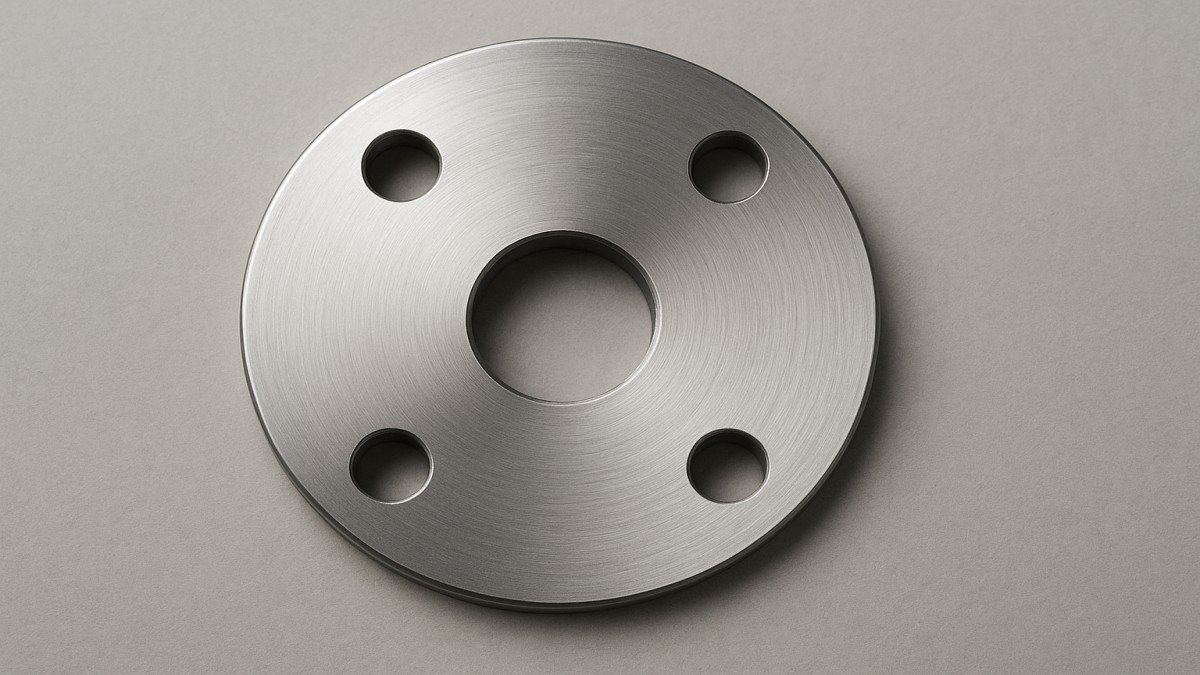
An orifice plate is a thin, circular metal plate with a hole (orifice) in the center or off-center, installed in a pipeline to measure the rate of flow of liquids, gases, or steam. When fluid passes through the orifice, the flow area reduces, causing a pressure drop across the plate. This pressure difference is then measured and used to calculate the flow rate using Bernoulli’s equation.
It is one of the most economical and standardized flow measurement devices.
Working Principle of Orifice Plate
The functioning of an orifice plate is based on Bernoulli’s principle and the continuity equation:
- As fluid approaches the orifice, velocity increases while pressure decreases.
- At the narrowest section just downstream of the plate (called the vena contracta), velocity reaches its maximum, and pressure reaches its minimum.
- Beyond this point, the fluid expands again, and some pressure is recovered, but a permanent pressure loss occurs.
The measured pressure difference between the upstream and downstream sides of the orifice is directly related to the flow rate.
Mathematically: Q=C⋅A⋅2ΔPρQ = C \cdot A \cdot \sqrt{\frac{2 \Delta P}{\rho}}Q=C⋅A⋅ρ2ΔP
Where:
- QQQ = volumetric flow rate
- CCC = discharge coefficient
- AAA = area of orifice opening
- ΔP\Delta PΔP = pressure drop across the plate
- ρ\rhoρ = fluid density
Types of Orifice Plates
Different designs are used depending on application requirements:
1. Concentric Orifice Plate
- Has a circular hole in the exact center.
- Commonly used for clean liquids and gases.
- Most widely used design.
2. Eccentric Orifice Plate
- The hole is offset from the center.
- Prevents accumulation of solids, slurries, or gas pockets.
- Suitable for slurry, sewage, and wet steam applications.
3. Segmental Orifice Plate
- Has a hole shaped like a segment of a circle.
- Used for fluids carrying solid particles to avoid clogging.
4. Quadrant Edge Orifice Plate
- Rounded inlet edge.
- Ideal for measuring viscous fluids like heavy oils.
5. Multiple-Hole Orifice Plate
- Contains several smaller holes instead of one.
- Reduces vibration and noise.
- Suitable for high-velocity gas flows.
Design and Construction
Orifice plates are usually made from stainless steel, nickel, monel, or other corrosion-resistant alloys, depending on fluid type.
Typical specifications include:
- Thickness: 3–12 mm
- Plate diameter: matches pipeline size
- Orifice bore diameter: calculated based on flow range and pressure drop
The plate is installed between pipe flanges and often paired with a differential pressure transmitter to measure flow.
Advantages of Orifice Plates
- Cost-effective: Simple design, low manufacturing cost.
- Versatile: Works with gases, liquids, and steam.
- Standardized: ISO, ASME, and AGA guidelines make it widely acceptable.
- Durable: With proper material selection, it lasts long.
- Easy installation: Fits between standard flanges.
Conclusion
The orifice plate is a time-tested and widely used flow measurement device. Its working principle, based on Bernoulli’s law, allows accurate flow calculation by measuring pressure drop across the plate. Despite limitations like pressure loss and moderate accuracy, it remains one of the most cost-effective and practical solutions for industries worldwide.
Whether in oil refineries, water supply networks, or chemical plants, the orifice plate continues to play a vital role in ensuring efficient and reliable flow measurement.
FAQs
1. What is the main purpose of an orifice plate?
To measure the flow rate of fluids by creating a pressure drop.
2. Which type of orifice plate is best for slurry fluids?
Segmental or eccentric orifice plates are best, as they prevent clogging.
3. How accurate are orifice plates?
Generally accurate to within ±1–2%, depending on installation and conditions.
4. Can orifice plates measure both liquids and gases?
Yes, they are versatile and can measure liquids, gases, and steam.
5. What is the lifespan of an orifice plate?
With proper material selection and maintenance, it can last several years.