



Introduction to Rail Operating Centres (ROCs)
Imagine controlling hundreds of trains, signals, and routes from one central hub. That’s the magic of a Rail Operating Centre, or ROC. These ultra-modern nerve centres have transformed the way railways are managed, ensuring that trains run smoother, faster, and safer than ever.
What is a Rail Operating Centre?
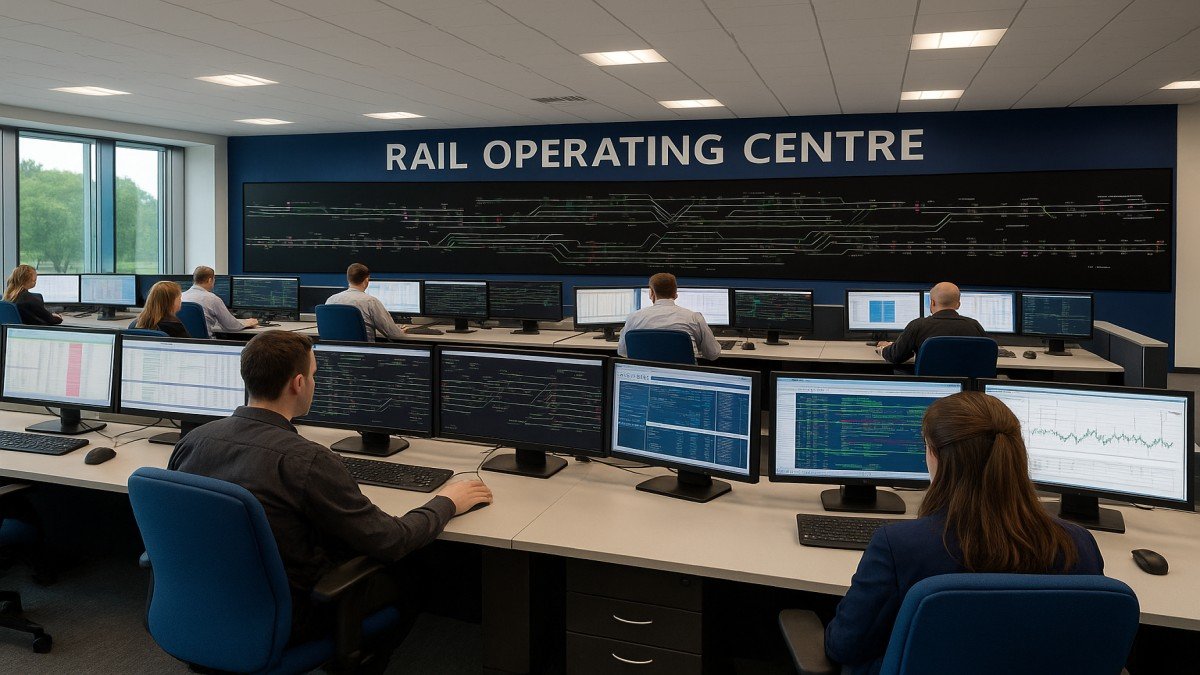
A Rail Operating Centre is a state-of-the-art facility where railway staff monitor, manage, and control train operations over large geographic areas. Instead of relying on hundreds of traditional signal boxes, today’s railway systems are increasingly managed through centralised hubs — the ROCs.
Evolution from Signal Boxes to ROCs
Gone are the days when a person would manually pull levers to change tracks. Over the last few decades, the railway industry has undergone a massive digital transformation. What started as simple signal boxes at every station has now evolved into large-scale digital control rooms equipped with massive screens, computers, and real-time data feeds.
Why ROCs Matter in Modern Rail Networks
With increasing demand for rail travel, especially in urban hubs, efficiency and safety are non-negotiable. ROCs help railways manage disruptions, reroute trains during emergencies, and reduce delays — all while keeping passengers informed.
Core Functions of a Rail Operating Centre
Train Movement Monitoring
Operators at ROCs keep a close watch on every train’s movement, ensuring that they’re running according to schedule. If there’s a delay or a disruption, operators are the first to respond.
Signal and Switch Control
Trains can’t change direction or tracks on their own. ROCs remotely control railway signals and switches (points), directing traffic much like air traffic controllers do for planes.
Incident Management and Response Coordination
From trespassers to technical faults, when something goes wrong on the railway, ROCs coordinate with field teams, emergency services, and drivers to resolve the issue fast.
Technology Powering ROCs
Real-Time Data Integration
Modern ROCs run on data — lots of it. GPS trackers, onboard computers, and trackside sensors feed real-time information into these centres.
GPS and Track Sensors
These help pinpoint train locations, detect wheel or track issues, and even predict maintenance needs before breakdowns happen.
Communication Systems
Communication is key in rail operations. ROCs rely on robust networks like GSM-R (Global System for Mobile Communications – Railway) and high-speed fibre to keep every team member in the loop.
Radio, GSM-R, and Fibre Networks
These systems connect train drivers, station staff, and maintenance workers directly to the ROC, ensuring a constant flow of information.
ROCs Across the UK (and Beyond)
Major Rail Operating Centres in the UK
Network Rail has been consolidating control from over 800 signal boxes into just 12 ROCs across the UK.
York ROC
Covering the East Coast Main Line, this ROC is one of the busiest and most advanced in the country.
Didcot ROC
Responsible for large portions of the Great Western Railway, Didcot ensures smooth operations across key commuter and intercity routes.
Manchester ROC
Handling traffic in the north, this ROC plays a crucial role in managing services in and out of major cities like Liverpool and Leeds.
Global Counterparts – Germany, Japan & USA
Countries like Germany and Japan have even more sophisticated systems, with AI already integrated into their ROCs. The United States, too, is rapidly upgrading freight and passenger rail controls.
Conclusion
Rail Operating Centres are the beating hearts of modern railway networks. They ensure that millions of passengers get to their destinations safely, efficiently, and on time. As technology evolves, ROCs will only become more powerful reshaping how we experience train travel. The next time you hop on a train, remember: there’s a team in a control room working quietly behind the scenes to make your journey seamless.
FAQs
1. What is the purpose of a Rail Operating Centre?
A ROC manages the real-time operation of trains, signals, and switches to ensure safety, efficiency, and prompt responses to any issues.
2. How do ROCs improve railway safety?
By centralising control, ROCs enable faster detection and resolution of faults or hazards, reducing the risk of accidents.
3. Are all trains controlled by ROCs now?
In most modern rail networks like the UK, yes. Traditional signal boxes are being phased out in favour of centralised ROCs.
4. What qualifications are needed to work in a ROC?
Typically, operators need technical training, computer literacy, and strong communication skills. Railway-specific certifications may be required.
5. Will AI replace human operators in ROCs?
AI will assist operators but not replace them entirely. Human judgment remains essential, especially during emergencies or unusual events.