


Introduction
Snaggle Tooth. A smile can say a lot about a person—it’s often the first thing people notice in social or professional situations. But for some, dental misalignments like a snaggle tooth can make them feel self-conscious. While the term may sound lighthearted, it refers to a noticeable tooth that is misaligned, protruding, or sticks out compared to the others.
This article explores what a snaggle tooth is, why it happens, its potential effects on health and confidence, and the treatment options available today.
What is a Snaggle Tooth?
A snaggle tooth is a crooked or misaligned tooth that noticeably stands out from the rest of the teeth. Most often, it refers to a canine tooth (sometimes upper, sometimes lower) that grows at an angle, higher, or forward compared to the surrounding teeth.
While many consider it a cosmetic dental issue, in some cultures a snaggle tooth is even seen as a charm or sign of uniqueness. In modern dentistry, however, it’s often addressed for both aesthetic and functional reasons.
Causes of a Snaggle Tooth
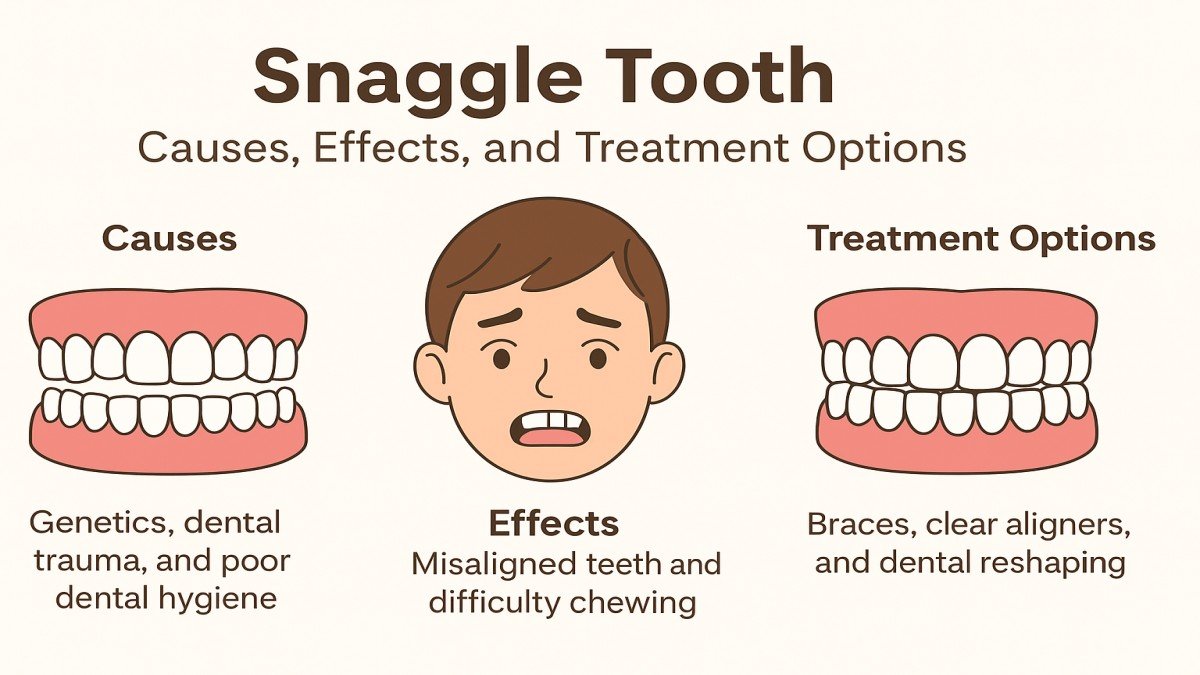
Several factors contribute to the development of a snaggle tooth:
1. Genetics
Dental misalignments are often inherited. If your parents or grandparents had crooked teeth, there’s a higher chance you might too.
2. Jaw Size and Crowding
A small jaw or overcrowded mouth can prevent teeth from having enough space to grow properly, forcing one tooth to protrude.
3. Delayed or Early Loss of Baby Teeth
When baby teeth fall out too early or too late, permanent teeth may not erupt correctly, leading to misalignment.
4. Thumb Sucking or Pacifier Use
Habits in early childhood can affect dental structure, sometimes pushing teeth out of alignment.
5. Trauma or Injury
Injuries to the jaw or teeth can shift the natural alignment, leading to a snaggle tooth.
Is a Snaggle Tooth Harmful?
Not always. Many people live with snaggle teeth without major health issues. However, potential problems include:
- Difficulty Cleaning: Misaligned teeth can create tight spaces that trap food and bacteria.
- Increased Risk of Cavities and Gum Disease: Poor cleaning access can lead to plaque buildup.
- Bite Problems: A snaggle tooth can cause uneven wear or discomfort when chewing.
- Speech Issues: In rare cases, it may affect pronunciation.
- Emotional Impact: Self-consciousness about smiling or speaking in public.
Cultural Perspectives on Snaggle Teeth
Interestingly, the perception of snaggle teeth varies across cultures.
- Western Culture: Seen mostly as a cosmetic issue to correct.
- Japan: Known as “yaeba,” snaggle teeth are sometimes considered cute and youthful, even enhancing attractiveness. Some people in Japan have even undergone cosmetic procedures to create the look.
This shows how much cultural views shape whether a snaggle tooth is treated or celebrated.
Treatment Options for Snaggle Tooth
Modern dentistry offers several ways to address snaggle teeth, depending on severity, budget, and personal preference.
1. Braces
- How it works: Metal or ceramic brackets gradually realign teeth over time.
- Best for: Moderate to severe misalignment.
- Duration: 1–3 years typically.
2. Clear Aligners (e.g., Invisalign)
- How it works: Removable, nearly invisible trays shift teeth into place.
- Best for: Mild to moderate cases.
- Advantages: Discreet, comfortable, removable for eating and cleaning.
3. Tooth Extraction
- When used: If overcrowding is the main cause. Removing one or more teeth creates room for realignment.
4. Cosmetic Dentistry (Veneers or Bonding)
- Veneers: Thin porcelain shells applied over teeth to improve appearance.
- Bonding: Tooth-colored resin used to reshape or hide imperfections.
- Best for: Cosmetic concerns rather than functional correction.
5. Oral Surgery
In severe cases, especially when caused by jaw alignment issues, surgery may be needed alongside orthodontics.
Conclusion
A snaggle tooth is more than just a quirky dental feature—it’s a condition influenced by genetics, habits, and jaw structure. While it isn’t always harmful, it can sometimes lead to oral health problems or emotional struggles.
Thankfully, modern dentistry offers a wide range of treatments, from braces and aligners to cosmetic options like veneers. Whether you choose to fix it or embrace it, the key is maintaining good oral hygiene and making the decision that feels right for your health and confidence.
FAQs
1. What exactly is a snaggle tooth?
It’s a misaligned or protruding tooth, often a canine, that sticks out compared to surrounding teeth.
2. Is a snaggle tooth genetic?
Yes, genetics often play a role, though habits and jaw size can also contribute.
3. Can snaggle teeth be fixed without braces?
Yes—options include clear aligners, veneers, or bonding, depending on severity.
4. Do snaggle teeth cause health issues?
Sometimes. They can lead to cleaning difficulties, bite problems, or gum disease risk.
5. Is it okay to leave a snaggle tooth untreated?
Yes, if it doesn’t cause health issues and you’re comfortable with your smile. Many people live with snaggle teeth without problems.