

The word traverse might look simple, but it carries a surprising amount of depth. You’ll find it everywhere from hiking trails and engineering drawings to math textbooks and computer algorithms. At its core, traverse is about movement, direction, and connection. Think of it like a bridge between points, ideas, or spaces. Let’s walk through what traverse really means and why it matters.
What Does Traverse Mean?
Literal Meaning of Traverse
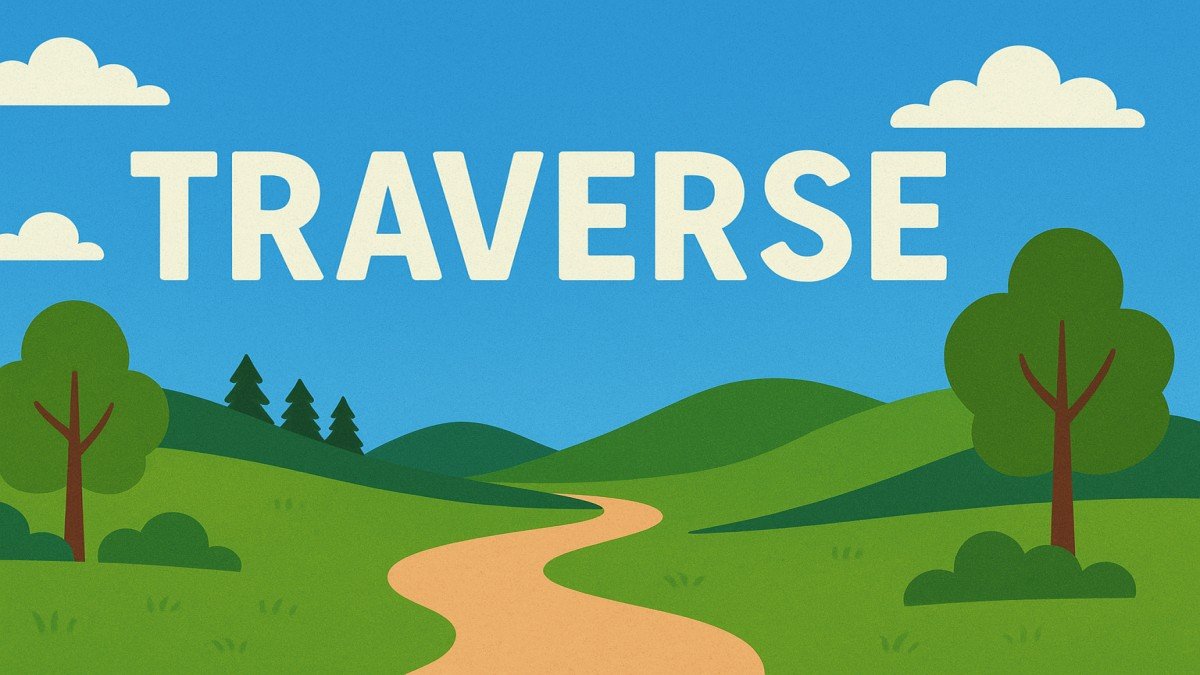
In its most basic sense, traverse means to travel across or pass through. Whether you traverse a forest, a city, or a dataset, the idea remains the same—you’re moving from one side to another.
Etymology and Origin
The word comes from the Old French traverser, meaning “to cross.” That origin still echoes in its modern usage, giving it a strong sense of direction and motion.
How the Meaning Has Evolved
Over time, traverse expanded beyond physical movement. Today, it also describes abstract journeys, like traversing information, ideas, or systems.
Traverse as a Verb
Traverse in Everyday Language
In daily conversation, traverse often sounds formal, but it’s powerful. Saying “we traversed the desert” paints a more vivid picture than simply saying “we crossed it.”
Common Examples in Daily Life
You might traverse a busy street, a mountain trail, or even a difficult phase in life. The word suggests effort, not just movement.
Synonyms and Similar Words
Common alternatives include cross, pass through, navigate, and journey across. However, traverse often implies a more deliberate or challenging action.
Traverse as a Noun
Structural and Technical Usage
As a noun, traverse refers to a structural element that runs across something, such as a beam or support.
Engineering and Architecture Context
In engineering, a traverse can be a crosspiece that provides strength or balance. Imagine it as the backbone holding things steady.
Traverse in Geography and Exploration
Traversing Landscapes
Geographers and explorers use traverse to describe systematic movement across land for study or mapping. It’s not random wandering—it’s purposeful exploration.
Famous Traverses in History
Historic expeditions often involved long traverses across continents, oceans, or polar regions. These journeys shaped maps and expanded human knowledge.
Traverse in Mathematics
Traverse in Geometry
In geometry and surveying, a traverse is a series of connected lines whose lengths and angles are measured. It’s like drawing a path using precise steps.
Practical Applications
Surveyors use traverses to map land accurately, helping with construction, boundaries, and planning.
Traverse in Computer Science
Data Structure Traversal
In computer science, to traverse means to visit each element in a data structure, such as a tree or graph.
Types of Traversing Methods
Common methods include preorder, inorder, and postorder traversal. Think of it as inspecting every room in a house in a specific order.
Traverse in Sports and Outdoor Activities
Ski Traverse and Climbing
In skiing and mountaineering, a traverse is a sideways movement across a slope rather than straight up or down. It requires skill and balance.
Safety Considerations
A poor traverse can be risky. Proper planning, equipment, and awareness are essential when traversing challenging terrain.
Importance of Traverse in Modern Context
Problem-Solving and Analysis
Traverse isn’t just about movement—it’s about method. In many fields, traversing means examining every part carefully to reach accurate conclusions.
Why the Concept Matters
From exploring mountains to analyzing data, traverse represents structured progress. It reminds us that how we move through something matters just as much as reaching the end.
Common Mistakes in Using the Word Traverse
Verb vs Noun Confusion
One common mistake is mixing up its verb and noun forms. Context is key to using traverse correctly.
Incorrect Context Usage
Traverse implies crossing or systematic movement. Using it casually without that meaning can sound awkward or incorrect.
Conclusion
The word traverse is a small linguistic powerhouse. It connects physical journeys with intellectual exploration, technical precision with everyday language. Whether you’re traversing a mountain range, a math problem, or a digital structure, the concept stays the same—move through thoughtfully and with purpose. Understanding traverse helps you appreciate not just destinations, but the paths that lead there.
FAQs
1. What does traverse mean in simple words?
Traverse means to cross or move through something from one side to another.
2. Is traverse always related to physical movement?
No, it can also refer to abstract movement, such as traversing data or ideas.
3. How is traverse used in computer science?
It describes the process of visiting all elements in a data structure like a tree or graph.
4. What is a traverse in surveying?
It’s a series of connected measured lines used to map land accurately.
5. Can traverse be used as both a noun and a verb?
Yes, traverse functions as both, depending on the context.