

What Is a Watch Glass?
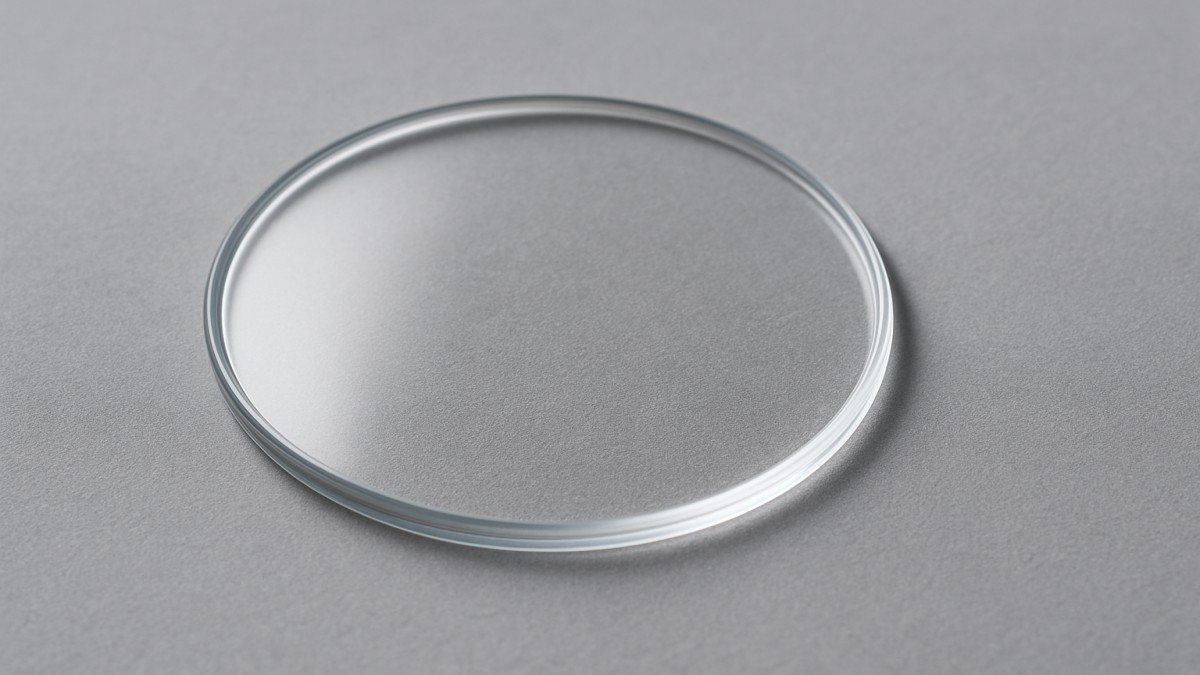
If you’ve ever stepped foot into a chemistry lab, chances are you’ve seen a small, round, slightly concave piece of glass that looks a lot like a contact lens for giants. That, my friend, is a watch glass. Despite its simplicity, it plays a crucial role in laboratories around the world.
Origin of the Name
The name “watch glass” actually comes from its resemblance to the glass covering the face of a traditional pocket watch. No surprise there — same shape, same curvature. But in labs, it’s far more than just a pretty piece of glass.
Structure and Design
A watch glass is typically made of glass or sometimes high-grade plastic. It’s circular with a shallow concave shape. Sizes vary, but the most common ones range from 50 mm to 150 mm in diameter. It’s transparent, heat-resistant, and smooth on both sides.
Why the Concave Shape?
- Prevents spillage of liquids
- Helps concentrate solids during evaporation
- Easy for observation of reactions
Common Uses in the Lab
This simple piece of equipment has a surprisingly wide range of uses. Let’s look at some of the most popular applications.
1. Evaporation of Liquids
You can use a watch glass to evaporate a solvent quickly by placing a solution on it and letting it sit in a warm environment. The wide surface area speeds up the process.
2. Holding Samples
It acts as a clean, flat surface to hold solids and powders for experiments.
3. Cover for Beakers
Placed on top of a beaker, it prevents contamination while still allowing gases to escape — perfect when you’re heating something or waiting for a solution to settle.
4. Weighing Materials
When combined with a weighing balance, the watch glass is used to hold substances for accurate measurement.
5. Observing Chemical Reactions
Its clear surface makes it ideal for observing small-scale reactions. You can see everything that’s happening from all angles.
Can It Handle Heat?
Yes, most watch glasses are made from borosilicate glass — the same kind used in kitchenware and lab glassware like Pyrex. It resists thermal shock, which means you can heat it moderately without worrying about breakage. But don’t place it directly over a flame or super-hot surfaces unless it’s specifically rated for that.
What You Shouldn’t Do With a Watch Glass
Despite its versatility, a watch glass isn’t a universal solution. Here’s what to avoid:
- Don’t use it to contain corrosive liquids for long periods.
- Avoid direct heating unless it’s labeled heatproof.
- Don’t stack them tightly — they might stick and break.
Cleaning and Maintenance
Watch glasses are easy to clean. Rinse with distilled water and wipe with a lint-free cloth. For sticky or chemical residues, a gentle soak in dilute acid or lab-grade detergent will do the trick.
Always dry it thoroughly before reuse to avoid contamination of future samples.
Different Sizes and Variants
Watch glasses come in different diameters:
- Small (50 mm) – For tiny sample handling
- Medium (75–100 mm) – Most commonly used
- Large (125–150 mm) – For bigger volume evaporations
Some labs use plastic or quartz versions for specific applications, especially when chemical resistance or transparency under UV light is required.
Conclusion
So next time you see a tiny, curved piece of glass lying quietly on a lab table, know that it’s not just some random dish — it’s a watch glass, the unsung hero of countless chemical reactions and experiments. It may be small, but it packs a punch in versatility, durability, and usefulness. Whether you’re a budding chemist or a seasoned researcher, this tool is sure to be a constant companion in your scientific journey.
FAQs
1. Can I heat a watch glass directly on a flame?
No, unless it is made of heat-resistant glass like borosilicate and is rated for direct flame. Most are not.
2. Is a watch glass microwave-safe?
Technically yes, if it’s glass and doesn’t have metallic markings. But use with caution and only in lab-specific microwave setups.
3. What’s the difference between a petri dish and a watch glass?
A petri dish is deeper and comes with a lid, mostly used for biological cultures. A watch glass is shallow and mainly for chemical use.
4. Can I use a plastic watch glass instead of glass?
Yes, for some low-temperature or non-reactive experiments. But avoid using it with strong acids or high heat.
5. How do I store watch glasses properly?
Stack them carefully with tissue or cloth in between. Store in a clean, dry cabinet to prevent scratching and contamination.