




Introduction
Where is Bonaire. When travelers think about Caribbean islands, names like Jamaica, the Bahamas, or Aruba usually come to mind. But tucked away in the southern Caribbean is Bonaire, a small island that has quietly become a paradise for divers, nature lovers, and curious travelers. So, where is Bonaire exactly? Let’s dive in.
Where Exactly is Bonaire Located?
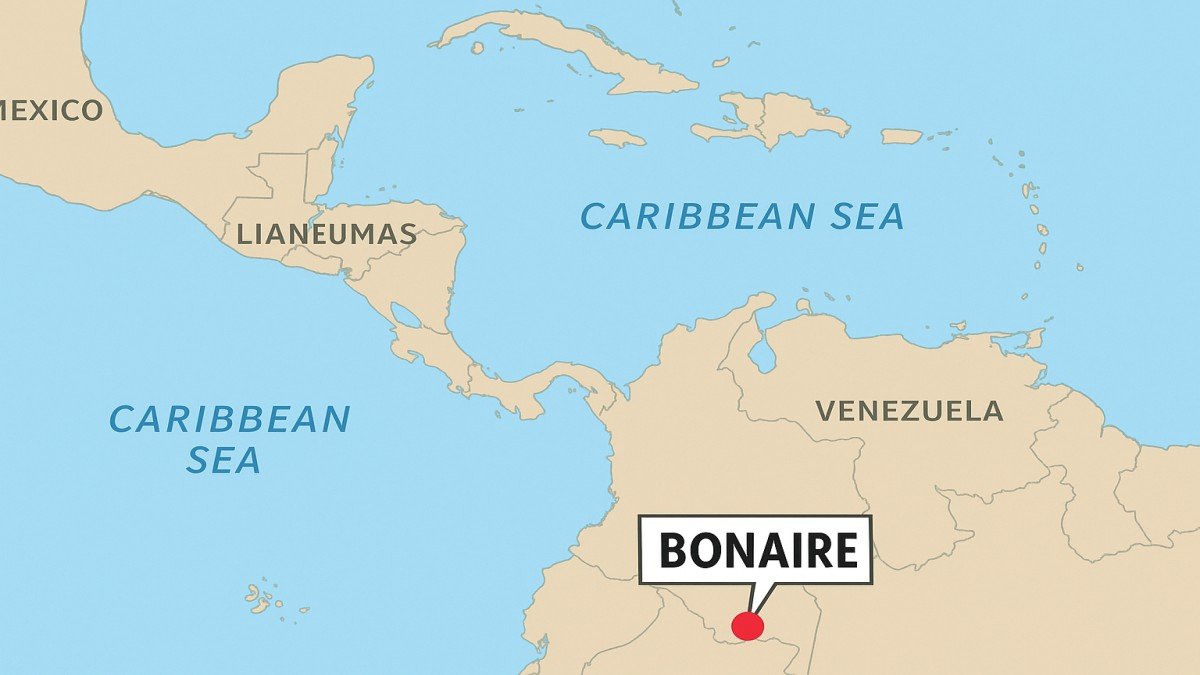
Bonaire is part of the Leeward Antilles in the southern Caribbean Sea. It sits just off the coast of Venezuela, about 50 miles (80 km) north of the mainland. Unlike many Caribbean islands, it’s outside the hurricane belt, making it a safer year-round destination.
Bonaire on the World Map
- Latitude & Longitude: Around 12°10′N and 68°17′W
- Distance from the U.S.: Roughly 1,900 miles (3,057 km) from Miami
- Distance from South America: Just 50 miles (80 km) north of Venezuela
- Distance from Europe: About 4,900 miles (7,885 km) from Amsterdam
This proximity makes Bonaire a crossroads of cultures and an easy destination for travelers from both continents.
The ABC Islands: Aruba, Bonaire, Curaçao
Bonaire is part of the ABC Islands, which include Aruba, Bonaire, and Curaçao. While they share cultural and historical ties, they each have unique vibes:
- Aruba: Known for luxury resorts and nightlife
- Curaçao: Famous for colorful Dutch architecture and a vibrant capital
- Bonaire: More laid-back, eco-friendly, and world-renowned for diving
Political Status of Bonaire
Unlike Aruba and Curaçao, which are autonomous countries within the Kingdom of the Netherlands, Bonaire is a special municipality of the Netherlands. This means it’s directly governed by the Dutch, uses the U.S. dollar, and blends European standards with Caribbean charm.
How to Get to Bonaire
- From the U.S.: Direct flights are available from cities like Miami, Atlanta, Houston, and New York.
- From Europe: Amsterdam is the main gateway with daily flights.
- From South America: Short connections from Venezuela and Colombia.
The island has one airport: Flamingo International Airport.
Climate and Best Time to Visit
Bonaire enjoys a warm, dry climate year-round. Average temperatures hover around 82°F (28°C).
- Dry Season: February to June – best for outdoor exploration
- Wet Season: October to December – short, light showers
- Peak Travel Time: November to April, when the weather is perfect
History of Bonaire
- Indigenous Era: Originally inhabited by the Caquetio people.
- Colonial Times: Claimed by the Spanish in 1499, later controlled by the Dutch.
- Modern Bonaire: Today, it’s a peaceful island balancing tourism, conservation, and culture.
Culture and Language
Bonaire is a melting pot. People speak Papiamentu, a Creole language mixing Portuguese, Spanish, Dutch, and African influences. Dutch is the official language, but English and Spanish are also widely spoken.
Festivals like Dia di Rincon and Carnival highlight the island’s joyful culture.
Why Bonaire is Famous
Bonaire is often called a diver’s paradise. It’s surrounded by protected reefs, making it one of the best scuba diving and snorkeling spots in the world. The island is also a leader in marine conservation, with Bonaire National Marine Park protecting its waters since 1979.
Top Attractions in Bonaire
- Washington Slagbaai National Park – hiking, birdwatching, and history
- Klein Bonaire – a small uninhabited island perfect for snorkeling
- Pekelmeer Flamingo Sanctuary – home to thousands of pink flamingos
Food and Local Cuisine
Bonaire’s food is a delicious mix of Dutch and Caribbean flavors. Popular dishes include:
- Keshi Yena – cheese stuffed with spiced meat
- Goat Stew – slow-cooked with local herbs
- Fresh seafood – mahi-mahi, snapper, and lobster
Wildlife and Nature
From sea turtles to parrotfish, Bonaire’s waters teem with life. On land, you’ll find iguanas, donkeys, and the famous flamingos. Birdwatchers especially love the island’s diversity.
Travel Tips for Visitors
- Currency: U.S. dollar
- Transport: Renting a car is the best option
- Safety: Bonaire is one of the safest islands in the Caribbean
- Power plugs: Type A, B, and F (bring an adapter if needed)
Why Bonaire Should Be on Your Bucket List
If you’re looking for a destination that combines nature, culture, and adventure, Bonaire is perfect. It’s not as commercialized as other Caribbean spots, which means you get a more authentic and peaceful experience.
Conclusion
So, where is Bonaire? It’s a little slice of paradise in the southern Caribbean, just north of South America, yet deeply connected to Europe through the Netherlands. Whether you’re into diving, culture, or simply relaxing under the sun, Bonaire offers an unforgettable experience.
FAQs
1. Is Bonaire safe for tourists?
Yes, Bonaire is one of the safest Caribbean islands with a low crime rate.
2. Do I need a visa to visit Bonaire?
U.S. and EU citizens don’t need a visa for stays under 90 days.
3. Can I use U.S. dollars in Bonaire?
Yes, the U.S. dollar is the official currency.
4. What is Bonaire best known for?
Scuba diving, snorkeling, and its marine conservation efforts.
5. Is Bonaire part of the Netherlands?
Yes, it’s a special municipality of the Netherlands.